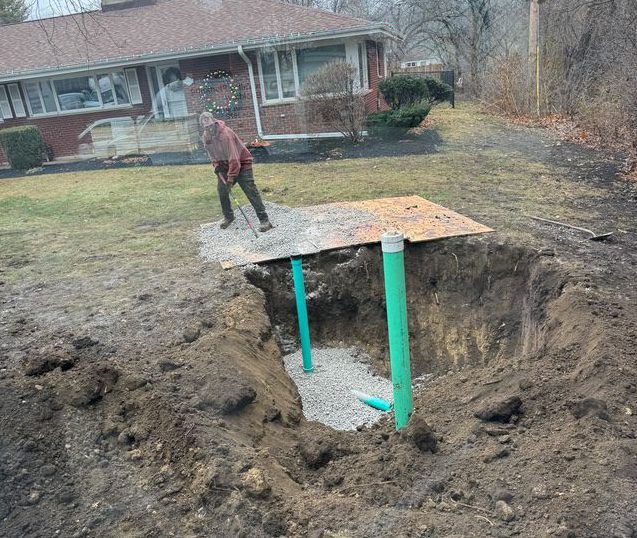
What Are the Signs You Need Sewer Line Repair in South Elgin?
TL;DR: Sewer line repair in South Elgin typically begins with small, easily overlooked symptoms that escalate into a backed-up basement. Here’s the short version:
- Watch for the early signs: multiple slow drains, gurgling toilets, sewage odors, soggy spots in the yard, or fixtures that back up when you run water elsewhere.
- Know the usual causes: tree root intrusion, corroded clay or cast iron pipe, and ground shifting that cracks or misaligns the line.
- A video camera inspection finds the exact problem and location before anyone digs.
- Trenchless repair can fix many lines with little or no digging; traditional excavation still wins for fully collapsed pipes.
- Replacement beats repair when the line is collapsed, sagging (“bellied”), or failing in several spots at once.
If you’re a homeowner in South Elgin or anywhere in Kane County experiencing slow drains, foul odors, or a fixture that backs up for no apparent reason, you may require sewer line repair. The good news: caught early, most sewer problems are far cheaper and less disruptive to fix than the basement-flooding emergencies they turn into. This guide walks you through the warning signs, the common causes, how the inspection works, and how to decide between a repair and a full replacement.
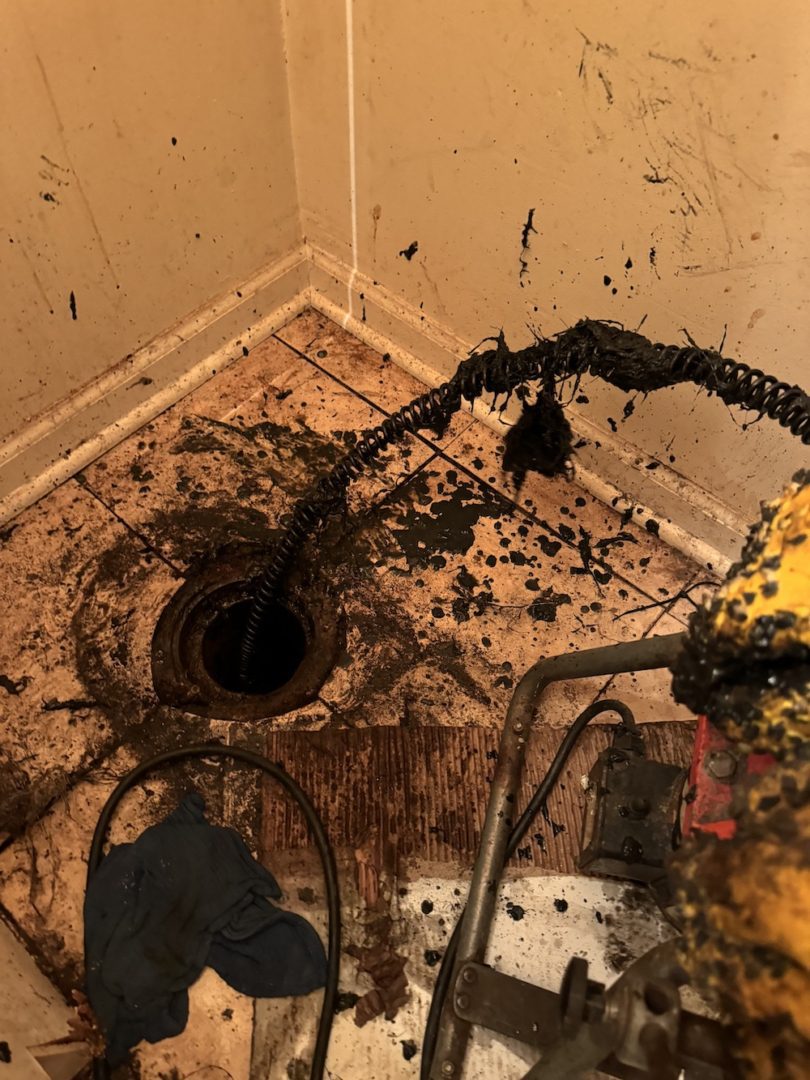
Warning Signs You Need Sewer Line Repair in South Elgin
Your main sewer line is the single pipe that carries everything from your home out to the city main. When it starts failing, the symptoms tend to show up in more than one place at once — that’s the tell.
Keep an eye out for these:
- Multiple slow drains. One slow sink is a local clog. Slow sinks, tubs, and toilets together point to the main line.
- Gurgling sounds. Air trapped by a blockage escapes back up through your drains and toilets.
- Sewage odor. A persistent rotten-egg or sewage smell inside or around your home means waste isn’t moving the way it should.
- Backups when you use other fixtures. Flush a toilet, and the shower drain bubbles up? Run the washing machine, and the floor drain overflows? That’s a classic main-line symptom.
- Wet, extra-green patches in the yard. A leaking sewer line fertilizes the grass above it and leaves soggy ground.
Don’t wait for a full backup. A line that’s 70% blocked still “works” right up until the day it doesn’t — usually during a holiday or a heavy storm. If you’re noticing two or more of these, it’s worth a look.
What Causes Sewer Line Failure in Kane County?
Sewer line repair in Kane County tends to trace back to three culprits, and the age of your home is a big clue to which one you’re dealing with.
Tree root intrusion. This is the big one. Roots seek the moisture and nutrients inside your pipe, and they slip in through joints and hairline cracks. Older clay tile lines are especially vulnerable, because the joints sit every couple of feet and roots exploit every one. Once inside, root masses act like a net — catching grease, wipes, and paper until the line clogs. According to the U.S. EPA, tree roots entering through defects are a leading cause of sewer blockages and overflows nationwide.
Pipe corrosion and age. Many South Elgin and Elgin homes were built when clay tile and cast iron were standard. Both degrade over decades — cast iron rusts and flakes from the inside, and clay grows brittle and cracks. A lot of the area’s sewer infrastructure is now well past 30 years old, which is right in the failure window.
Ground shifting. Illinois soil moves with freeze-thaw cycles and changing moisture. That movement can crack a pipe, pull joints apart, or create a low spot — a “belly” — where waste pools and solids settle instead of flowing through.
Grease and “flushable” wipes make all of this worse. They’re not a root cause, but they’re the debris that turns a minor pipe defect into a full blockage.
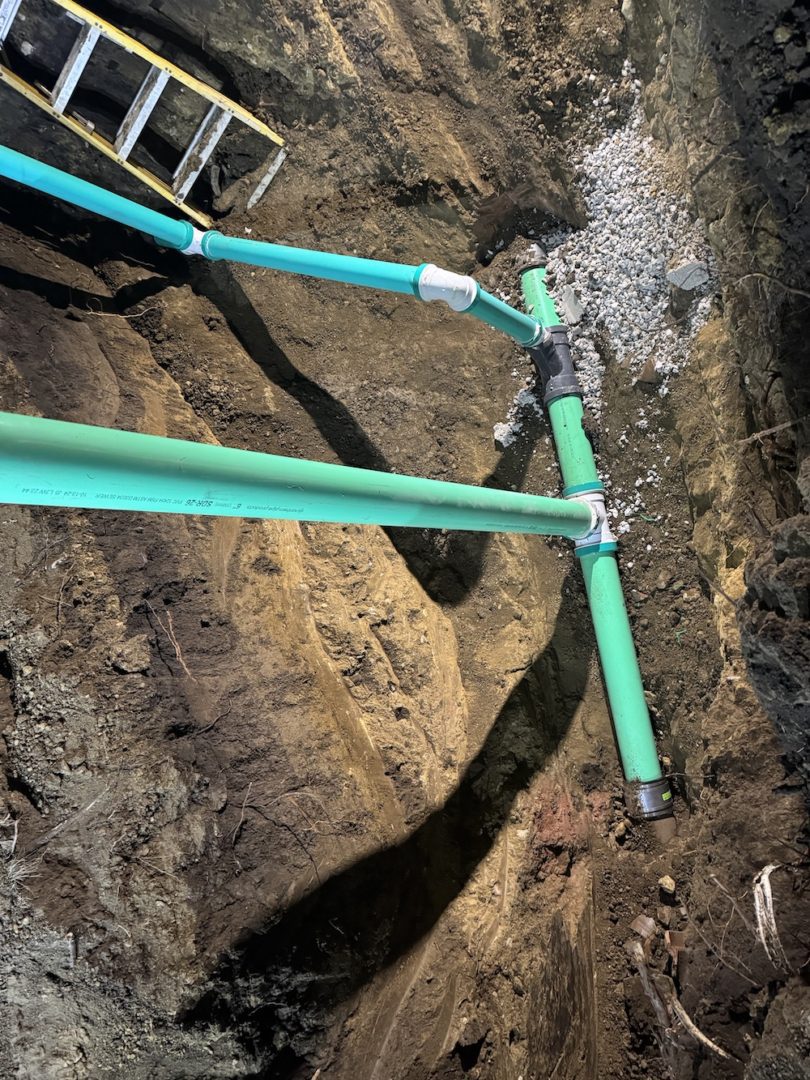
How Video Sewer Inspection Finds the Real Problem
Here’s the step that saves you money: nobody should be guessing — or digging — until a camera has looked inside the pipe.
A video sewer inspection sends a high-resolution, waterproof camera through your line by way of a cleanout or access point. Our technician watches real-time footage to see exactly what’s happening: roots, a crack, a collapse, a belly, or a simple grease clog. The same equipment locates the trouble spot’s depth and position, so any repair is targeted instead of exploratory.
This matters for two reasons. First, it tells you whether you actually need a repair or just a thorough cleaning. Second, a date-stamped inspection video is required documentation if you want to use the city’s reimbursement program (more on that below). It’s a small step that prevents a lot of unnecessary digging and expense.
Trenchless vs. Traditional: Your Sewer Line Repair Options
Once the camera shows what’s wrong, you’ve got two broad paths.
Trenchless repair fixes the pipe with little to no excavation. Two common methods:
- Cured-in-place pipe (CIPP) lining — a resin-coated liner is inserted into the old pipe and cured in place, creating a new, seamless, root-resistant pipe inside the old one.
- Pipe bursting — a new pipe is pulled through the old one while a bursting head breaks the old pipe outward.
The appeal is obvious: your driveway, landscaping, and patio mostly stay intact, and the work is often faster.
Traditional (open-cut) repair digs down to the pipe and replaces the damaged section directly. It’s the right call when a line has fully collapsed, when there’s no viable path for a liner, or when only a short, accessible segment needs work. Sometimes a quick excavation of one bad spot is the simplest, most cost-effective fix of all.
Not every line is a candidate for trenchless, which is exactly why the camera inspection comes first. If roots are the only issue and the pipe is structurally sound, hydro jetting may clear the line and buy you years before any repair is needed at all.
Repair or Replace? When Sewer Line Replacement in South Elgin Makes Sense
The honest answer most homeowners want: should you patch it or pull it?
Lean toward repair when the damage is isolated — one cracked section, a single root intrusion point, a short belly — and the rest of the pipe checks out on camera.
Lean toward sewer line replacement in South Elgin when:
- The line has collapsed or is crushed in one or more places.
- The pipe is bellied along a long run, so waste keeps pooling and re-clogging.
- You’re seeing repeat failures in multiple spots — a sign the whole line has reached the end of its life.
- The material itself is failing throughout (deteriorated clay tile or badly corroded cast iron).
Replacing a line that’s failing in five places will almost always cost less over time than repairing it five separate times. A camera inspection plus an honest conversation about the pipe’s overall condition is how you make that call with real information instead of a guess. You can learn more about our main sewer line cleaning and repair approach, and browse our full range of sewer line services in Elgin and the surrounding area.
Don’t Overlook the Elgin Sewer Lateral Assistance Program
Before you pay out of pocket for a replacement in the public right-of-way, check whether you qualify for help.
The City of Elgin runs a Sewer Lateral Assistance Program that can reimburse eligible homeowners for 50% of repair costs, up to $5,000, for work completed in the public right of way. The catches worth knowing: you have to contact the Elgin Utilities Department before any work starts, provide a date-stamped televised (camera) picture of the affected area, and submit two estimates from licensed plumbing contractors. Funding is first-come, first-served and subject to annual availability.
Programs and ownership rules vary by jurisdiction, so if your home is inside the Village of South Elgin, check directly with the South Elgin Water & Sewer Division for what applies to your address. As a rule, homeowners are responsible for the sewer lateral running from the house to the city main, which is precisely why staying ahead of small problems pays off.
Trusted Sewer Line Services in Elgin and Kane County
For more than 15 years, Fox Valley Plumbing & Backflow has handled sewer line repair for homeowners across South Elgin, Elgin, and the wider Kane, Lake, DuPage, and Cook County areas. We’re licensed, bonded, and insured, we back our work with a warranty, and we keep your home clean while we work — shoe covers, tarps, and a tidy job site are standard, not extras.
We start every sewer job with a camera inspection so you get a clear diagnosis and honest options — repair, trenchless, or replacement — never a sales pitch for work you don’t need. And because sewer emergencies don’t keep business hours, we’re available 24/7 for backups and breaks.
Frequently Asked Questions
How do I know if my sewer line is clogged or my main line is broken? A single slow drain usually means a localized clog. When several fixtures slow down or back up at once — especially if a toilet flush makes a tub or floor drain gurgle — the problem is likely in your main sewer line. A video camera inspection confirms whether it’s a clog, roots, a crack, or a collapse.
Is sewer line repair my responsibility or the city’s in South Elgin? Homeowners are generally responsible for the sewer lateral that runs from the house to the city main. The municipality maintains the main line itself. If your cleanout has standing water, the issue may be on the city’s side; if the cleanout is dry but the house is backed up, the blockage is usually in your private line.
Can a sewer line be repaired without digging up my yard? Often, yes. Trenchless methods like cured-in-place pipe lining and pipe bursting repair or replace the line with little to no excavation, as long as the pipe is a candidate. A camera inspection determines whether trenchless will work or whether traditional excavation is the better fix.
How much does sewer line repair cost in Kane County? It depends on the cause, the length of the pipe affected, the depth, and the method. That’s why we inspect first — so you get an accurate, transparent quote instead of a guess. Eligible Elgin homeowners may also recover up to 50% (max $5,000) of right-of-way work through the city’s Sewer Lateral Assistance Program.
How often should I have my sewer line inspected? For older homes with clay or cast iron pipe, or properties with mature trees near the line, a camera inspection every one to three years is a smart way to catch root intrusion and cracks before they become backups.
Get Your Sewer Line Inspected by Fox Valley Plumbing
Slow drains and sewage smells don’t fix themselves — and a small sewer problem rarely stays small. If you’re in South Elgin or anywhere in Kane County, the fastest way to peace of mind is a camera inspection and a straight answer about what your line actually needs.
Call Fox Valley Plumbing & Backflow at (847) 624-3872 or reach out online to schedule your sewer inspection or emergency repair. We’re available 24/7 for backups and breaks across South Elgin, Elgin, and the surrounding counties.