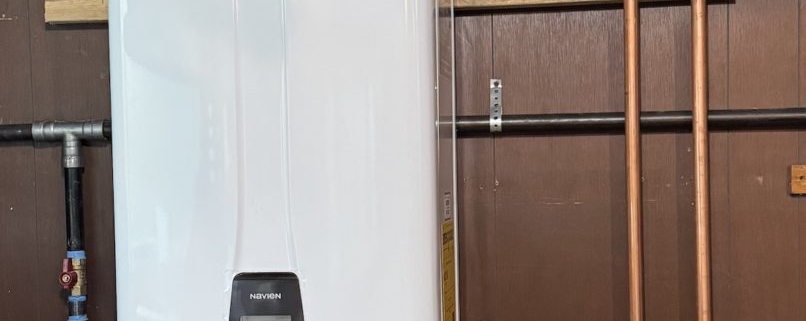
If you’re a homeowner in Elgin, Illinois, you’ve probably noticed the rising cost of heating water month after month. Traditional tank water heaters run constantly — keeping 40 to 80 gallons hot around the clock, whether you need it or not. That adds up. Tankless water heater installation in Elgin is becoming a go-to solution for smart homeowners who want hot water on demand, lower energy bills, and a system that lasts.
In this guide, we’ll walk you through everything you need to know about going tankless — from the real benefits and how they compare to traditional units, to the most common repair issues and how Fox Valley Plumbing can help keep your system running at peak performance.
What Is a Tankless Water Heater and How Does It Work?
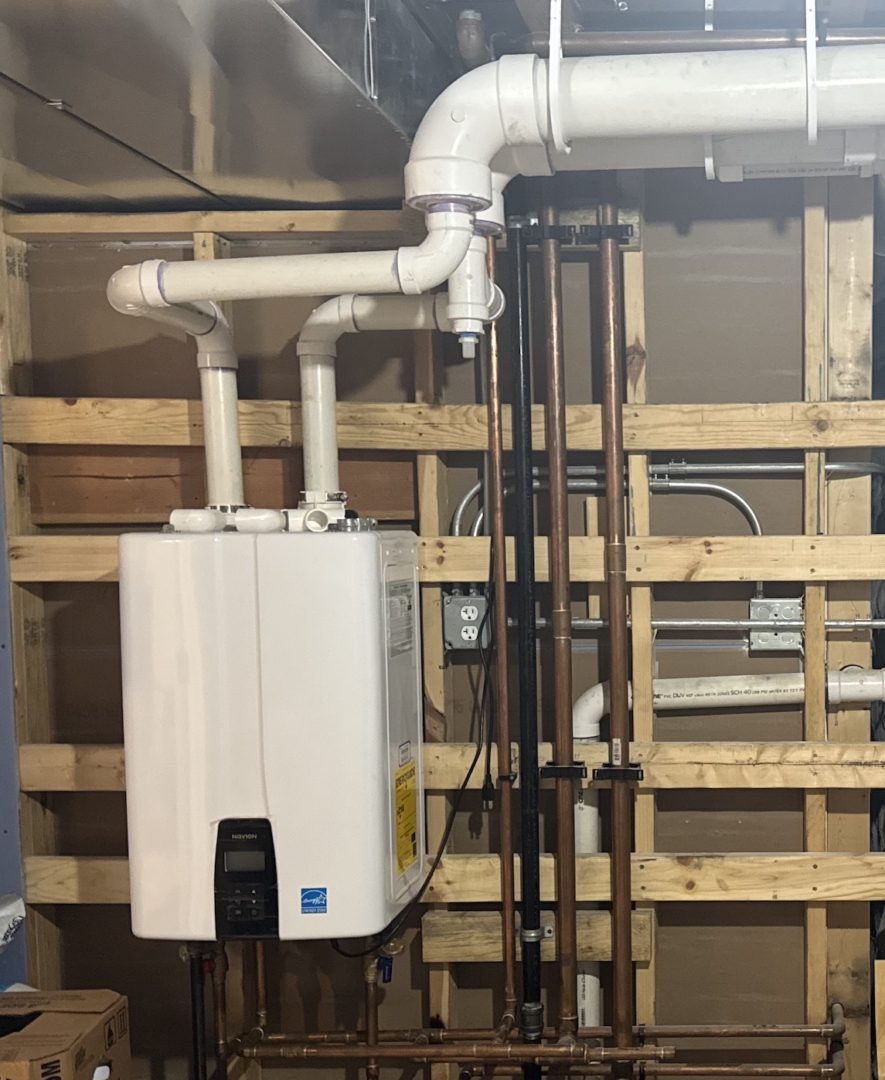
A tankless water heater — also called an on-demand water heater — heats water directly as it flows through the unit rather than storing it in a tank. When you turn on a hot water faucet, cold water travels through a pipe into the unit, where a gas burner or electric element heats it instantly. The result? A continuous supply of hot water whenever you need it.
Unlike traditional water heaters that cycle on and off all day to maintain a standing reservoir of hot water, tankless systems only activate when hot water is actually requested. This fundamental difference is what drives the energy savings and lifespan advantages that Elgin homeowners are discovering.
Key Components of a Tankless System
- Heat exchanger (the core of the unit)
- Flow sensor that activates heating on demand
- Gas burner or electric heating element
- Venting system (for gas models)
- Temperature control panel
Tankless vs. Tank Water Heater: What Elgin Homeowners Need to Know
The tankless vs tank water heater debate comes down to how you use hot water in your home and what matters most to you — upfront cost, long-term savings, or endless hot water. Here’s a side-by-side look at how the two systems stack up for Elgin households.
| Feature | Tankless Water Heater | Traditional Tank Heater |
|---|---|---|
| Energy Efficiency | Up to 34% more efficient | Constant standby heat loss |
| Lifespan | 20+ years | 8–12 years |
| Hot Water Supply | Endless on demand | Limited by tank size |
| Space Required | Compact, wall-mounted | Large floor footprint |
| Upfront Cost | Higher installation cost | Lower initial cost |
| Operating Cost | Lower monthly bills | Higher monthly bills |
For most Elgin homeowners planning to stay in their homes for several years, the long-term savings on energy bills and the extended lifespan of a tankless system make the higher upfront investment well worth it.
Top Benefits of Tankless Water Heater Installation in Elgin
1. Significant Energy Savings
According to the U.S. Department of Energy, tankless water heaters can be 24–34% more energy efficient than conventional storage tank heaters for homes that use 41 gallons or less of hot water daily. For homes using more, they can still be 8–14% more efficient. Given the cost of natural gas and electricity in Illinois, that translates into real monthly savings that add up over the life of the unit.
2. Endless Hot Water on Demand
Running out of hot water mid-shower is a thing of the past with a properly sized tankless system. Whether your household is running the dishwasher, doing laundry, and showering simultaneously, a whole-home tankless unit delivers a consistent flow of hot water without the wait. This makes them especially popular in larger Elgin households.
3. Space-Saving Design
Traditional water heaters take up significant floor space in your utility room or garage. Tankless units are compact — typically about the size of a small suitcase — and mount directly on the wall. That frees up valuable square footage in your Elgin home.
4. Longer Lifespan
The average traditional tank water heater lasts 8 to 12 years. A well-maintained tankless unit can last 20 years or more, making it a smarter long-term investment for homeowners who aren’t planning to sell anytime soon.
5. Reduced Risk of Water Damage
Tank water heaters carry the risk of catastrophic failure — when a tank corrodes and ruptures, it can release dozens of gallons of water into your home. Tankless units eliminate that risk since no stored water reservoir can fail.
Is Your Elgin Home Ready for Tankless Water Heater Installation?
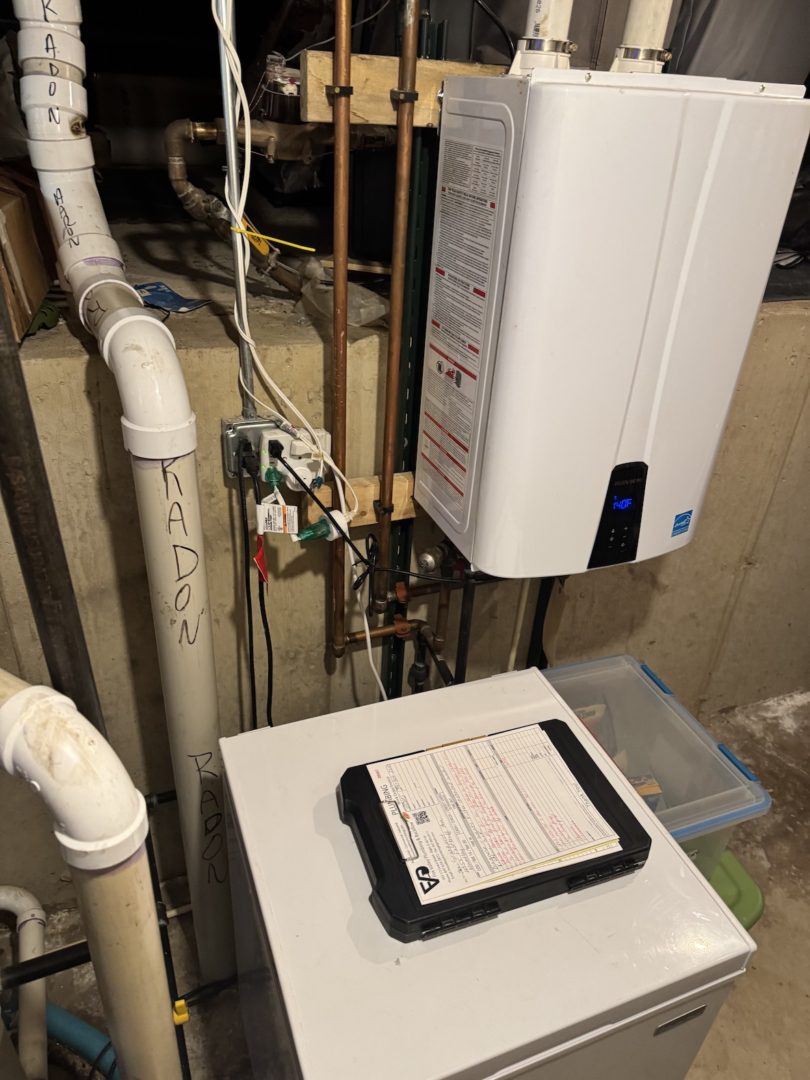
Before scheduling your installation, there are a few important factors to consider. Tankless water heater installation in Elgin requires a professional assessment to ensure your home’s infrastructure can support the new system.
Gas Line Capacity
Gas-powered tankless water heaters require a larger gas supply line than traditional units — typically ¾ inch instead of ½ inch. Your Fox Valley Plumbing technician will assess whether your existing gas line needs to be upgraded as part of the installation.
Venting Requirements
Gas tankless systems require proper venting to exhaust combustion gases safely. Depending on your home’s layout, this may require new vent pipes or modifications to existing venting. This is a critical safety consideration that must be handled by a licensed plumber.
Electrical Requirements
Even gas-powered tankless units require a 120V electrical connection for the ignition and controls. Electric tankless systems require significantly more power — often requiring a panel upgrade. Your plumber will evaluate your electrical setup during the assessment.
Water Quality in Elgin
Elgin, Illinois, draws water from Lake Michigan, which is treated by the City of Elgin Water Division. While the water quality is generally good, mineral content can still lead to scale buildup inside tankless units over time. Installing a whole-house water softener or descaling system alongside your tankless heater is often recommended to protect your investment.
Common On-Demand Water Heater Repairs in Elgin
Even the best tankless systems need occasional maintenance and repair. As your local Elgin water heater services provider, Fox Valley Plumbing has seen — and fixed — them all. Here are the most common on-demand water heater repair issues we encounter in Elgin homes.
1. Error Codes and System Ignition Failures
Most modern tankless water heaters display error codes when something goes wrong. Ignition failures are among the most common — often caused by gas supply issues, a dirty flame sensor, or a faulty igniter. If your unit is flashing an error code and won’t produce hot water, don’t ignore it. Our technicians can diagnose and resolve ignition issues quickly.
2. Mineral Scale Buildup
Even with relatively clean municipal water, calcium and magnesium deposits can build up inside the heat exchanger over time. This is especially true in areas with moderately hard water. Scale buildup reduces efficiency and can eventually cause permanent damage. Annual flushing and descaling by a qualified technician keeps your unit running efficiently and extends its lifespan.
3. Cold Water Sandwich
The “cold water sandwich” is a quirk unique to tankless systems — a brief burst of cold water between hot water draws that occurs when the unit has to re-fire after a short pause. While it’s more of an inconvenience than a malfunction, it can be minimized with a recirculation pump or buffer tank. Ask your Fox Valley Plumbing technician about the best solution for your household’s usage patterns.
4. Venting Problems
Blocked or improperly installed venting is a serious safety hazard for gas tankless systems. Symptoms include error codes related to exhaust, a unit that shuts off unexpectedly, or an unusual smell near the heater. Never ignore these signs — contact a licensed plumber immediately.
5. Water Temperature Fluctuations
If your tankless unit is producing water that’s too hot, too cold, or inconsistent, the issue could be a faulty temperature sensor, a failing flow sensor, or an undersized unit struggling to meet your household’s simultaneous hot water demands. A proper sizing assessment at installation prevents many of these issues from occurring in the first place.
6. Leaking or Dripping
While tankless units are less prone to catastrophic leaks than tanks, connections, fittings, and the heat exchanger can develop leaks over time. Any sign of moisture or dripping around your unit should be inspected promptly to prevent water damage.
How to Maintain Your Tankless Water Heater in Elgin
The good news is that tankless water heaters require relatively little maintenance compared to traditional tanks. But “relatively little” doesn’t mean “none.” Here’s what Fox Valley Plumbing recommends for Elgin homeowners to keep their systems running at peak efficiency.
Annual Professional Flush and Inspection
Once a year, have a licensed plumber flush your tankless system with a descaling solution to remove mineral buildup from the heat exchanger. During this visit, your technician should also inspect the inlet filter screens, check connections for leaks, and verify proper venting. ENERGY STAR recommends regular professional maintenance as the best way to protect your investment and maintain efficiency.
Clean the Inlet Filter Screens
Small filter screens on the cold water inlet can collect sediment over time and restrict flow. These can be rinsed clean periodically — it’s a simple task that most homeowners can handle themselves. Check your owner’s manual for location and cleaning instructions.
Test the Pressure Relief Valve
The temperature and pressure (T&P) relief valve is a critical safety device. Testing it once a year ensures it will function properly if pressure inside the unit ever becomes dangerously high. This is a quick check your plumber can perform during an annual visit.
Monitor for Error Codes
Get familiar with your unit’s error code system. Most modern tankless heaters have an LED display or app integration that communicates system status. Catching a problem early — before a minor issue becomes a major repair — can save you significant money.
Why Choose Fox Valley Plumbing for Elgin Water Heater Services?
When it comes to tankless water heater installation and repair in Elgin, Fox Valley Plumbing and Backflow brings over 15 years of experience serving Kane County homeowners. Here’s what sets us apart from the competition.
- Licensed and insured — Master Plumber License ID: 058-161084
- Upfront, transparent pricing with no surprise costs
- Same-day service available for urgent repairs
- 100% satisfaction guarantee on every job
- Expert knowledge of Elgin’s water infrastructure and local code requirements
- Full-service plumbing support beyond just water heaters
We don’t just install your tankless water heater and disappear. We’re a local Elgin company — your neighbors — and we stand behind every job we do. From the initial assessment and sizing to installation day and annual maintenance, Fox Valley Plumbing is your long-term partner for Elgin water heater services.
Interested in learning more about our full range of plumbing services? Visit our water heater installation and repair page to see everything we offer.
Frequently Asked Questions: Tankless Water Heaters in Elgin
How much does tankless water heater installation cost in Elgin?
The total cost of tankless water heater installation in Elgin typically ranges from $1,500 to $3,800 depending on the unit, fuel type, and whether gas line or venting modifications are needed. Fox Valley Plumbing provides detailed, upfront quotes so there are no surprises on installation day.
How long does installation take?
Most residential tankless water heater installations are completed in four to eight hours. Installations that require gas line upgrades or new venting may take longer. Your technician will give you a clear timeline before work begins.
Can I replace my tank water heater with a tankless unit?
Yes — and it’s one of the most popular upgrades we perform for Elgin homeowners. The transition requires some modifications (gas line, venting, electrical), which is why a professional assessment is so important. Fox Valley Plumbing handles the entire process from evaluation to installation.
What size tankless water heater do I need for my Elgin home?
Sizing depends on your household’s peak hot water demand — how many showers, appliances, and fixtures you’re likely to run simultaneously — and Elgin’s incoming groundwater temperature. Our technicians calculate this precisely to ensure you get a unit that meets your household’s needs without overpaying for capacity you won’t use.
How long do tankless water heaters last?
With proper maintenance, most tankless water heaters last 20 years or more — nearly double the lifespan of a traditional tank water heater. Many manufacturers offer warranties of 10–15 years on the heat exchanger.
Ready to Go Tankless? Contact Fox Valley Plumbing Today
Tankless water heater installation in Elgin is one of the smartest home upgrades you can make — for your comfort, your wallet, and your home’s value. Whether you’re ready to schedule an installation, need an on-demand water heater repair, or just want an honest assessment of your current system, we’re here to help.

Choosing a whole house tankless water heater isn’t just about convenience. It gives you reliable hot water while keeping energy costs down.
Unlike traditional tanks, it heats water only when needed, making it more efficient. But to get those benefits, you need the right size. Here’s how to find out.
Why Proper Sizing of a Tankless Water Heater Matters
Choosing the wrong size tankless water heater can cause problems. Too small, and you’ll run out of hot water. Too large, and you’ll waste money on energy costs.
The right size keeps everything running smoothly. Showers, dishwashers, and washing machines all need steady flow.
Capacity is measured in gallons per minute (GPM), showing how much water a unit can heat at once. Understanding tankless water heater capacity helps you choose wisely.
Determining Your Household Hot Water Demand
Your hot water needs depend on how many fixtures run at once. If multiple showers, a dishwasher, or a washing machine operate together, you’ll need a higher-capacity unit. Calculating the right flow rate ensures your system can keep up. Here’s how to figure it out.
Understanding Flow Rate
Flow rate is the measure of how much water flows through a fixture or appliance per minute, and it’s expressed in GPM. For example:
- Shower: 2.5 GPM
- Dishwasher: 1.5 GPM
- Kitchen Faucet: 1 GPM
- Washing Machine: 2 GPM
Add these together for fixtures likely to be used at the same time. If you regularly run the dishwasher while taking a shower, you’ll need a heater that handles at least 4 GPM.
Estimating Simultaneous Usage
Think about your household habits. Do two showers happen at once? Is someone washing dishes while another person runs a laundry load? For example:
- Two simultaneous showers: 5 GPM
- One shower and a dishwasher: 4 GPM
For most households, a unit with 6-7 GPM should cover a few simultaneous uses. Larger homes with more bathrooms may need a bigger system. This is especially true if multiple showers run at once.
Accounting for Temperature Rise
Temperature rise is the difference between the water coming in and the heat you need. Cold groundwater in winter can impact performance. Regional temperature changes can also make a difference.
How to Measure Temperature Rise
Start by checking your local groundwater temperature. In warm areas, water comes in around 60°F.
In colder places, it’s closer to 40°F.
To find the temperature rise, subtract this from your ideal shower temperature. For example:
- Desired output: 110°F
- Groundwater: 50°F
- Temperature rise: 60°F
A bigger temperature rise needs more heating power. Knowing this helps you choose the right heater.
Impact of Regional Differences
Your geographic location plays a key role in sizing. Colder climates need more powerful heaters. Warmer regions require less heating power. In a cold region, even a high-capacity tankless water heater may need to work harder to meet demand.
Selecting the Right Type of Tankless Water Heater
After finding your hot water needs and temperature rise, choose gas or electric. The best option depends on your home and budget.
Gas vs. Electric Tankless Water Heaters
Gas tankless water heaters have a higher GPM. They also handle big temperature rises better than electric models. They’re ideal for large families or homes with high water demands. However, they require proper venting and professional installation, which can increase upfront costs.
Electric tankless water heaters, on the other hand, are compact and easier to install. They’re a great fit for smaller homes or point-of-use applications, like under a sink. On demand electric water heaters costs less but may not provide enough GPM for a whole home.
Cost Considerations
Tankless water heater prices vary by type and size. Electric models cost up to $800 on average, while gas units range from $230–$2,300. Installation adds to the expense, especially for gas systems. Upfront costs are higher, but long-term energy savings make them worth it.
Final Tips for Choosing Your Tankless Water Heater
Before buying, consult a plumber to confirm flow rates, temperature rise, and installation needs. This ensures you choose the right system. Check warranties and consider long-term maintenance to avoid costly mistakes.
Choosing the right tankless water heater starts with proper sizing. Calculate your hot water needs and factor in temperature rise. Understand gas vs. electric models. Take time to evaluate your options and seek expert advice if needed.
The right system guarantees reliable hot water, energy savings, and long-term peace of mind. Learn more about our tankless water heater installation & repair services today.

Taking care of your commercial tankless water heater is essential. Regular maintenance keeps it running efficiently and reliably. It helps lower energy costs, prevents breakdowns, and ensures you always have hot water—something every business needs. With proper upkeep, your system will last longer, saving you money on repairs and replacements.
Understanding the Basics of Tankless Water Heater Maintenance
Tankless water heater maintenance means regular checks and simple upkeep. This includes flushing the system, cleaning filters, and checking heating parts. A professional plumber should handle more complex tasks to keep everything running smoothly.
Benefits of Routine Maintenance
Staying consistent with maintenance does much more than prevent a sudden cold shower. It extends the lifespan of the unit, keeps energy bills predictable, and ensures water flow stays steady. Even the most robust units need regular attention to prevent buildup that strains performance. Small tasks like flushing save you from costly repairs and downtime.
Key Components That Require Attention
Some parts of your tankless water heater work harder than others and need regular care:
Heating elements: Mineral buildup lowers efficiency faster than you might think. It makes your system work harder and uses more energy.
Inlet valve: Unrestricted water flow is key to even heating. A clogged or faulty valve can cause temperature fluctuations.
Filters: Filters catch debris to protect your system. But when they clog, water pressure drops, and performance declines.
Neglecting these parts can mean expensive repairs, higher energy bills, and a shorter system lifespan.
How to Perform a Tankless Water Heater Flush
Flushing your system removes mineral buildup caused by hard water. Here’s how you can do it:
- Turn off the power and water supply. Safety first—this prevents electrical hazards and leaks.
- Close the inlet and outlet valves to isolate the heater.
- Attach hoses to the service ports, letting the water flow into a bucket.
- Run a descaling solution through the system for 45 minutes using a submersible pump.
- Rinse thoroughly by flushing with clean water.
This simple process safeguards your water heater from long-term damage.
When and Why to Descale Your Unit
Over time, mineral deposits collect inside your tankless water heater. This buildup chokes the system, raising energy consumption and reducing efficiency.
If your business operates in a hard water area, descaling twice a year is non-negotiable. Softer water? An annual flush typically does the job.
Tools and Equipment You’ll Need
Before starting, gather these essential items:
- A submersible pump
- A utility bucket
- Suitable descaling solution
- Hoses for connecting to service ports
Having the right tools ensures the task runs smoothly and saves you the cost of professional labor. If uncertain about the process, Fox Valley Plumbing is here to help.
Common Signs You Need Tankless Water Heater Cleaning
A tired system doesn’t hide its problems completely. Look for these warning signs:
- Fluctuating water temperatures
- Reduced water pressure
- Unusual error codes
Ignoring these signs puts unnecessary strain on your heater.
How to Address Minor Issues
For clogged filters, clean them gently with water. If an error code appears, consult the manual or reset the system. However, ongoing issues often require professional attention.
Professional Tankless Water Heater Maintenance Costs
Contracting professionals ensures your water heater runs efficiently year-round. Trained technicians descale tankless water heaters to keep them running efficiently. They also perform electrical checks and handle complex repairs. These tasks are best left to professionals for safety and proper maintenance.
Average Maintenance Costs and What to Expect
The cost depends on the unit’s size, system age, and local water conditions. On average, annual maintenance typically ranges from $75 to $1,300. This minor investment prevents costly overhauls later.
For a precise estimate based on your system’s needs, get in touch with us directly. We’re happy to assess your setup and provide a clear, accurate quote.
How to Choose the Right Service Provider
Choosing a reliable provider is crucial. Look for technicians with proper certifications and strong reviews. Years of experience matter, as does transparency on service pricing and repairs. With Fox Valley Plumbing, you’re partnering with a trusted expert in tankless water heater maintenance.
Protect Your Investment with Proper Care
Regular maintenance does more than keep the hot water flowing. It lowers costs, boosts performance, and extends your system’s life. Following a maintenance schedule protects your investment and prevents surprise breakdowns. It also saves you time and money.
Don’t wait—keep your system running at its best with professional support.
Call Today! (847) 624-3872

The majority of homes include common devices like water heaters. This is so because the water entering your home travels through a pipe system and is often either frigid or cool, depending on the season. You need a water heater to have warm enough water to wash your clothes, take a bath, or shower.
They usually reside in basement and resemble large metal cylinders. Tankless water heaters, which offer endless hot water on demand, are one of the noteworthy features of more recent types. Yet the typical, dependable water heater model essentially consists of a drum filled with water and has a heating mechanism on the bottom or inside.
A water heater may operate more effectively and last longer in a number of simple and low-cost ways. The advantages of maintaining your water heater are obvious. Insulation can cut water heating expenses by as much as 9% and reduce heat loss by up to 45 %. The tank’s effectiveness and longevity are increased by flushing out the sediment.
Simply follow to these hot water heater maintenance suggestions to reduce the cost of your hot water:
- Check Your Work: Close the shutoff button on the water heater’s cold water supply line. The pressure inside the heater’s tank will then be released by turning on any tap that has hot water. Keep the tap running until you are done. Turn off the electricity at the main panel if you have an electric heater. Turn the gas control dial to “off” on a gas burner.
- Do a Mini-Flush: Remove sediment from the tank’s bottom to stop rust and corrosion, which will also increase the appliance’s energy effectiveness. Although flushing the water heater tank completely is ideal, doing so requires turning off the water heater. A mini-flush is effective, quick, and can be carried out while the water boiler is operating.
- Test the Valve: On the top or side of the water heater, the pressure-relief valve should be tested. When the pressure inside the tank rises, this valve opens immediately. Place a bucket beneath the water heater tank’s discharge pipe and slightly lift the pressure-relief valve’s lever to test it.
LOOKING FOR A HOT WATER SOLUTION OR TANKLESS WATER HEATER REPAIR IN ILLINOIS?CALL (847) 624-3872
- Replace the Valve (If Necessary): Replace the valve if it doesn’t release water when you raise the lever. Turn off the water, empty the tank, remove the discharge line, and then unscrew the old valve to replace it. The replacement valve’s threads should be taped with sealant before being screwed in. Your valve might leak if it has been in use for a while without being checked. Replace the valve if that is the situation.
- Dial Down the Temperature: The standard installation setting for water heaters is between 130 and 140 degrees Fahrenheit. Lower temps, however, reduce the possibility of scalding and delay the buildup of mineral deposits in your water heater tank. Turn the temperature gauge on a gas water heater’s gas valve to 120 F to reduce the water’s temperature. You might have to take out a tiny metal panel covering the thermostat on an electric water heater in order to reduce the water temperature. Both a higher and a lower thermostat are common in electric water heaters. If your thermostat has two settings, set the lower one to the same temperature as the higher one.
- Check the Anode Rod: Connect a hose to the drain cock on the tank and release a few liters of water. Now screw the rod out from the top of the radiator by inserting a 1 1/16-inch socket into the rod’s hex head. Purchase a replacement, cover its threads with Teflon tape, reinstall it in the tank, and tighten tightly if it is less than 12 inch thick or covered with calcium. If there is little space above the tank, use this segmented rod.
- Insulate the Pipes: Buy some 3/8-inch thick, self-sticking foam pipe insulation that fits the pipe lines’ diameter. As far as you can, slide the foam over the hot and cold water lines. Condensation in the heat can be avoided by insulating the cold water pipe. To seal the insulation, peel the tape off. Cover the conduit with 1-inch-thick unfaced fiber glass pipe wrap if it is 6 inches or less from the flue.
- Insulate the Heater: Cut the insulating material to fit around the tank’s pipes, TPR valve, and temperature control. Wrap the tank’s exterior and use foil tape to repair any cuts. Gas and oil stoves’ tops shouldn’t be covered. An extra-large circle of insulation should be used to cover an electric heater, and its border should be taped firmly to the tank’s side.
LOOKING FOR A HOT WATER SOLUTION OR TANKLESS WATER HEATER REPAIR IN ILLINOIS?
CALL (847) 624-3872

Homeowners can pick between tank water heaters and tankless water heaters when they require dependable hot water. The greatest water heater for your home depends on a number of factors unique to your household and your needs for hot water delivery; there is no one ideal option.
Tank Water Heaters: Tank storage water heaters are a common option in homes, they are the type of water heater that homeowners are most likely to be familiar with. A tank-style heaters that heat water and then store it for later use.
Both electric and natural gas-powered tank water heaters are available. Your home’s tank water heater consumes energy constantly. These heaters maintain the temperature of the water inside the tank constantly so that it is ready for use when the taps are turned on.
Tankless Water Heater: As an energy-efficient replacement for tank water heaters and the issues they have with dormant heat loss, tankless water heaters are a more recent development in the water heating industry.
Unlike tank-style water heaters, tankless heaters only heat water when your hot water tap and other appliances actually need it. When a hot water tap activates and indicates that hot water is required, the tankless water heater heats water to the desired temperature and sends it to the selected outlet.
LOOKING FOR INSTALL A WATER HEATER IN ILLINOIS?
CALL (847) 624-3872
Differences between Tank and Tankless Water Heater
Initial Investment:
Since they are more expensive to install than tank-style water heaters, on-demand water heaters have higher installation expenses. A natural gas model will likely cost more than an electric model on both sides. When replacing a tank storage water heater with a tankless hot water heater, there are extra steps required.
Therefore, a tankless water heater will be more expensive up front than a tank model.
Power Savings
Tankless water heaters are more expensive up front, but because of the energy savings they produce, many homeowners choose for this technology. Over time, the savings you create help you recoup the cost of the purchase.
In a typical home, water heaters consume the third most energy.
That is not to say that energy-efficient storage tank water heaters are not conceivable. Due to typically lower natural gas prices, gas is usually more affordable to operate than electricity.
Overall, tankless water heaters save you money since they use less energy and have reduced operational costs, which reduces the cost of your utility bills.
Product Life
The typical lifespan of a tank water heater is between 10 and 15 years. While it comes to equipment failure, there are some harm hazards when using a heater in the tank design.
In contrary, tankless water heaters have a lifespan of 20 to 30 years. Water hardness and maintenance techniques have an impact on the equipment’s service life.
Restrictions on Installation
Tank water heaters demand significantly more installation area than tankless models due to their storage tank. You give up precious space that could be utilized for other purposes in order to make room for a big water storage tank.
Tankless water heaters are the best option for installation in confined spaces. They are easily able to fit in small locations and may be mounted on walls, which is beneficial in smaller households.
Conclusion
Tankless water heaters dominate in almost all categories when compared to storage tank water heaters. However, the tankless water heater will cost more to buy and install.
If your family frequently requires hot water at the same time, compare the cost of installing two tankless heaters to meet the demand with that of building a larger storage tank water heater. If you choose a storage tank model, find out the cost of replacing the anode rods and when it needs to be done before purchase and installation to increase the tank’s lifespan.
LOOKING FOR A HOT WATER SOLUTION OR TANKLESS WATER HEATER REPAIR?
CALL (847) 624-3872
Choosing and Installing a Tankless Water Heater
Are you interested in installing a tankless water heater in your home? If so, you’ll want to know the requirements for tankless water heaters, installation tips, and the benefits of tankless water heaters before making your decision.
Benefits of Tankless Water Heaters
Tankless water heaters are more energy-efficient than their counterparts. This is because they don’t have to store heated water and reheat it when needed. They provide hot water on demand! They also save you money by being able to use cold water to generate hot water on a whim – no need to run gallons of tap water through a hot-water tank waiting for it to reach the desired temperature. And when used in combination with solar panels, they’re even more energy efficient!
Installation Tips
Tankless water heaters are very simple to install. This is perfect for do-it-yourself enthusiasts who love tackling projects from start to finish. Installation usually takes no more than an hour or two and can be done on your own with simple tools like a wrench and an open flame source such as a propane torch or welding equipment.

Choosing the right tankless water heater
Finding a reliable and dependable water heater is crucial, that’s why at Fox Valley Plumbing, we specialize in tankless water heaters. We offer a wide range of options to fit any home.
Tankless water heater installation
At Fox Valley Plumbing, we take pride in our workmanship. We will make sure to install your new tankless water heater correctly to ensure it’s long-lasting and dependable.
Call Us At (847) 624-3872
Your old gas or electric water heater is not heating like it’s supposed to.If you’ve ever been in a cold shower against your will then you know there are not many more stressful situations, or annoying than wanting to take a hot shower and learning you have no hot water.
What! Really! No one wants a cold shower in the dead of winter. (Except maybe…. never mind). Trust, here at Fox Valley Plumbing and backflow we understand. That is why we are here to help. Fox Valley Plumbing would like to serve you with all your water heater service needs!
Call Us At (847) 624-3872
Your old gas or electric water heater is not heating like it’s supposed to. Maybe it’s leaking or too hot? Fox Valley Plumbing and Backflow in Barrington, Illinois and surrounding areas are here to help. We’ve got everything you need to keep your baths hot but not too hot. So you can enjoy long showers if you so desire.
Our professional plumbers are experienced and capable of taking care of all brands of water heaters, electric and gas. We service commercial water heaters for your business and for your home. We use Bradford White water heaters for all our standard installs.
Call Us at (847) 624-3872
Fox Valley Plumbing uses high-quality, high-efficiency contractor-grade units with reliable warranties. We work with all-size electric and gas water heaters. Federal regulations have changed many of the options for larger (60, 75, and 80-gallon tanks) so we would be happy to talk to you about your options.
Electric Hybrid heaters and tankless water heaters have become the favorite upgrade for those oversized tank heaters of the past. Several commercial settings are moving to tankless water heaters as well, both for efficiency and extra space.
And guess what? “It doesn’t have to be expensive.” Trust and believe we get it. After all, Fox Valley Plumbing and Backflow has been owned and operated by an Elgin, Illinois family, just like yours, for nearly 20 years. That’s why here at Fox Valley Plumbing and Backflow, we’re doing everything we can to make sure that you are completely satisfied with your new Gas, Electric, or Tankless water heater, and to keep the price as low as we can.
Call Us at (847) 624-3872
As you know, all of our units come with a manufacturer warranty, to make sure that our work and your new water heater are in top working condition for as long as we can reasonably expect them to.
Our plumbers are trained and extremely skilled and educated, ensuring that you are getting precisely what you want out of your gas or electric water heater.
Are you the one that took a bath this morning and were upset to learn that you can’t even fill your tub before the faucet spits out all of Antarctica? Or possibly you’re the last one to take a shower while your family was visiting for the weekend and let’s just say it wasn’t hot.
Whatever the reason, and whatever the need, Fox Valley Plumbing and Backflow wants to be your water heater service provider. We will make your showers and baths Hot again!