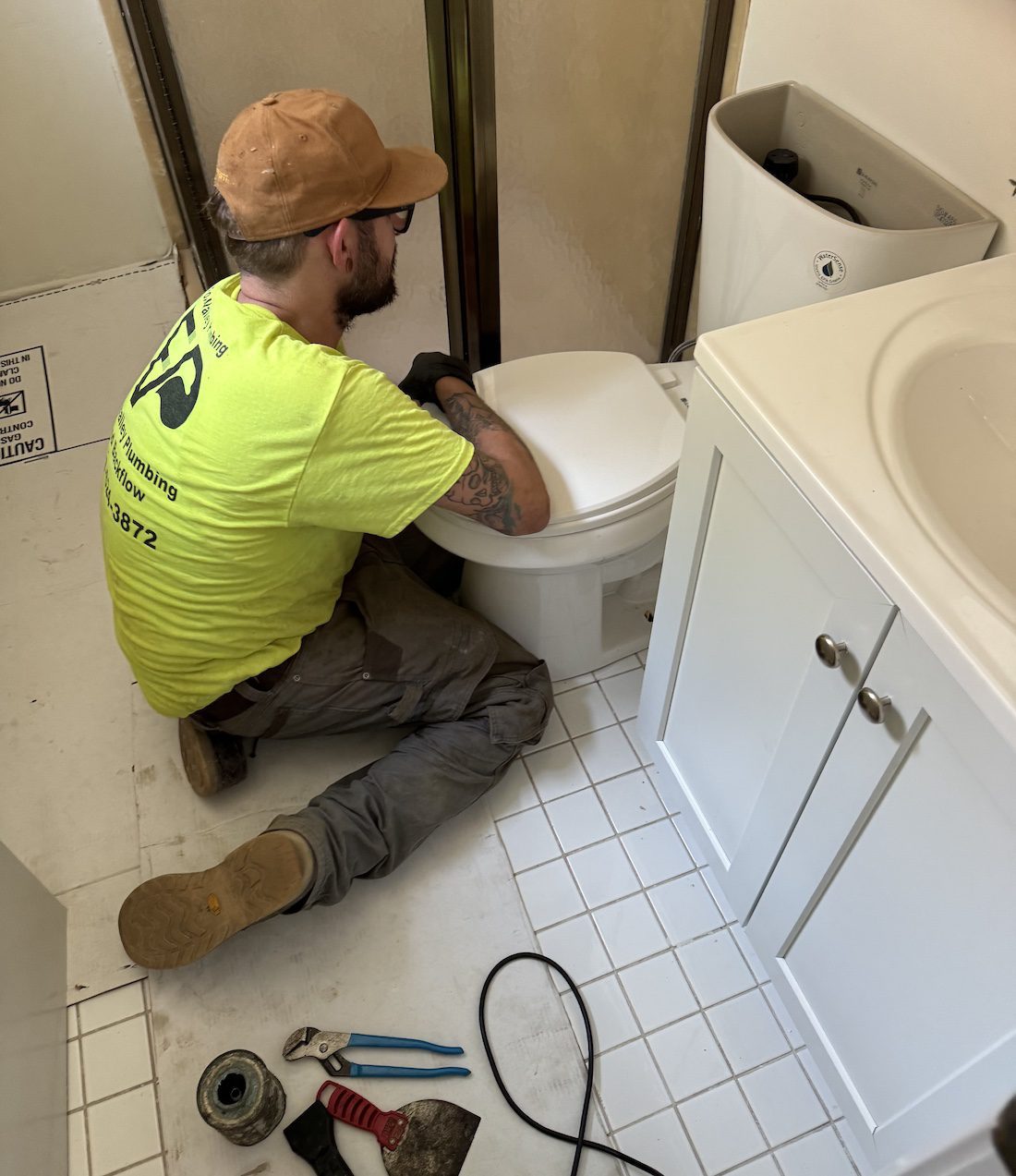
Elgin homeowner inspecting bathroom sink plumbing under vanity

You noticed a slow drain on Saturday morning. By noon, you were elbow-deep under the vanity, YouTube video paused on your phone, wondering why the P-trap you just replaced is still dripping. Sound familiar? Bathroom plumbing in Elgin homes trips up even handy homeowners — not because the work is impossible, but because a few small missteps turn a $12 fix into a $400 call. This post walks you through the five most common DIY bathroom plumbing mistakes we see in Elgin and the surrounding Fox Valley area, and exactly what to do instead. Some of these you can absolutely handle yourself. Others are worth a quick call to a licensed plumber before things get worse.

Mistake #1: Over-Tightening Fittings and Supply Lines

This is the number-one rookie error, and it happens to experienced DIYers, too. The instinct is logical — if a little is good, really tight must be better. It isn’t. Plastic fittings on toilet fill valves, P-trap nuts, and compression fittings on supply lines crack under too much torque. Brass fittings strip. Ceramic valve seats inside faucets shatter.

The plumbing rule of thumb is “hand-tight plus a quarter turn” for most compression and slip-joint fittings. For threaded metal connections, two to three wraps of PTFE (Teflon) tape and snug-with-a-wrench is enough. If you’re cranking with both hands and a pipe wrench on a plastic nut, stop.

Elgin’s water hardness runs between 15 and 25 grains per gallon — that’s genuinely hard water. Mineral deposits can make old fittings feel stuck, which tempts people to force them. If a fitting won’t budge, soak it with white vinegar or a penetrating lubricant for 20 minutes before applying more force. Forcing a calcified fitting almost always ends in a cracked seat or a snapped line.

If you’ve already cracked a supply line or fitting, shut off the angle stop valve under the fixture immediately and contact Fox Valley Plumbing before the slow drip becomes a flooded cabinet.

Mistake #2: Ignoring Proper Drain Slope (and Venting)

A lot of homeowners who tackle bathroom drain work — replacing a section of drain pipe, moving a vanity, adding a second sink — focus entirely on getting the pipes to connect. What they miss is slope and venting, and both matter enormously.

Drain pipes need a consistent fall of ¼ inch per foot toward the main stack. Too little slope and waste sits in the pipe, causing slow drains and odors. Too much slope and the water races ahead of the solids, leaving debris behind — same result, different cause. If you’re eyeballing it, you’re probably wrong. Use a level.

Venting is the part that really catches people off guard. Every fixture drain needs a vent to allow air into the system so water can flow freely and sewer gases can escape outside rather than into your bathroom. Under Illinois plumbing code (77 Ill. Adm. Code 890), vent requirements are specific — distance from the trap to the vent, pipe sizing, tie-in location. A drain that gurgles, drains slowly, or lets sewer smell into the room is almost always a venting problem.

This is one area where a quick consultation with a licensed plumber before you start the project saves a lot of rework. Our residential plumbing services include exactly this kind of rough-in guidance.
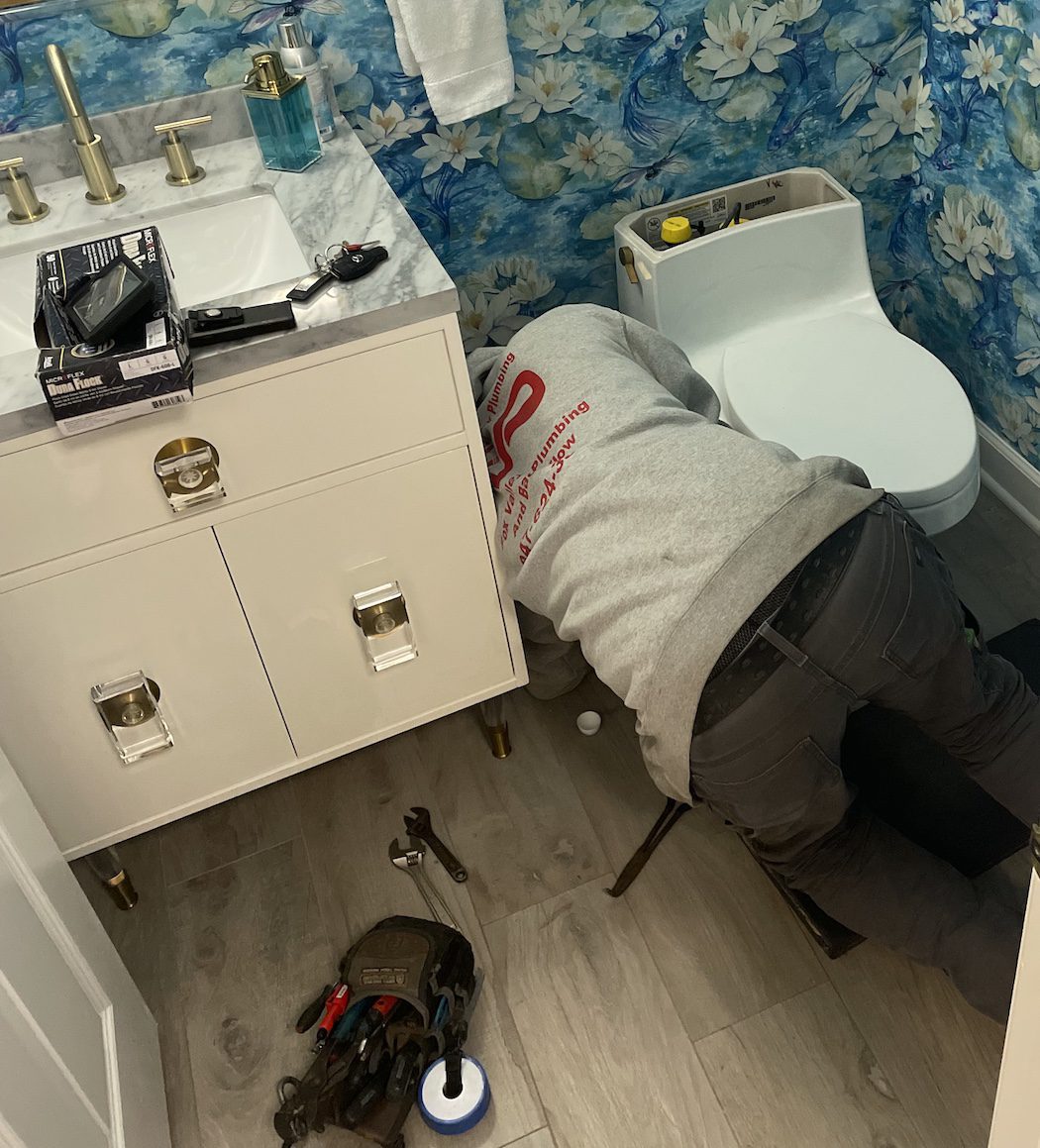
Diagram showing correct drain pipe slope for bathroom plumbing in Elgin

Mistake #3: Using Chemical Drain Cleaners on Slow Drains

We hear this one constantly: “I poured Drano down it and now it’s worse.” Chemical drain cleaners — the liquid and gel varieties you grab at the hardware store — are one of the most misunderstood products in home maintenance. They work on some clogs, some of the time. But the chemistry that dissolves hair and soap scum also eats away at older pipe materials, degrades rubber gaskets, and can actually lock a partial clog into a solid mass if the product doesn’t fully clear it.

In Elgin homes built before the 1980s, you may still have cast-iron drain lines or older ABS plastic. Repeated chemical treatments accelerate corrosion in cast iron and can warp ABS joints. If you have a slow bathroom drain, a drain snake (also known as a hand auger) is almost always a better first option than chemicals. A 25-foot hand snake costs about $30 at any hardware store and clears the hair-and-soap clogs that cause 90% of bathroom drain slowdowns.

If the snake doesn’t fix it, the clog is likely deeper, or there’s a bigger issue — such as root intrusion, a partial collapse, or a venting problem. That’s when professional bathroom drain cleaning makes sense. We can run a camera down the line and know exactly what you’re dealing with before touching anything.

One more thing: if you’ve already poured chemicals down a drain and it’s still slow, tell your plumber before they start work. Chemical residue in a drain is a safety hazard for anyone snaking or jetting the line.

Mistake #4: Skipping the Wax Ring Replacement (or Using the Wrong One)

Toilets get removed more often than people realize — to replace flooring, fix a leak at the base, clear a stubborn clog, or move the toilet during a bathroom remodel. Every single time a toilet comes off the floor, the wax ring must be replaced. Every time. The wax compresses when the toilet is set and cannot re-seal reliably once it’s been disturbed.

The mistake we see most often: homeowners reuse the old wax ring because it “looks fine,” or they buy the wrong size. Wax rings come in standard and extra-thick (double-wax) versions. If your toilet flange sits below the finished floor level — common after tile work — you need the thicker ring or a flange extender. Set a standard ring on a low flange, and you’ll have a slow sewer-gas leak at the base that’s nearly impossible to detect until the subfloor starts to rot.

Setting a toilet correctly also means checking that the flange itself is in good shape. A cracked or broken flange won’t hold the toilet bolts securely, and no wax ring compensates for that. Flange repair is a straightforward job for a plumber and not expensive — but it’s easy to miss if you’re focused on just swapping the toilet.

The International Association of Plumbing and Mechanical Officials (IAPMO) sets the standards for toilet installation that Illinois code references. Getting this right the first time protects your subfloor, your indoor air quality, and your water bill.

Mistake #5: Mismatching Pipe Materials Without the Right Transition Fittings

Elgin has a wide range of housing stock — bungalows from the 1920s, ranch homes from the 1960s, subdivisions from the 1990s and 2000s. That means bathroom plumbing in this area can include galvanized steel, copper, CPVC, PEX, and ABS drain pipe, sometimes all in the same house. When homeowners do repairs or upgrades, they often connect whatever new pipe they bought to whatever old pipe is there — without the correct transition fitting.

Connecting copper directly to galvanized steel without a dielectric union causes galvanic corrosion that eats through the connection in a few years. Gluing PVC to ABS with the wrong cement causes joints to fail. Running PEX into a high-heat zone near a recirculation line without the right fittings causes the pipe to soften and leak. These aren’t hypothetical — we fix them regularly.

Before you buy a pipe at the hardware store, know what you’re connecting to. If you’re not sure, take a photo and ask. Most plumbing supply counters (and honest plumbers) will tell you exactly what fitting you need. If the repair involves mixing materials in a wall or under a slab, it’s worth having a licensed plumber do it — not because it’s complicated, but because a failed joint inside a wall is a much bigger problem than the original repair.

For older Elgin homes with galvanized supply lines that are corroding from the inside out, a full residential repiping assessment is worth considering. Galvanized pipe from the pre-1960s era has a finite lifespan, and patchwork repairs eventually stop making financial sense.
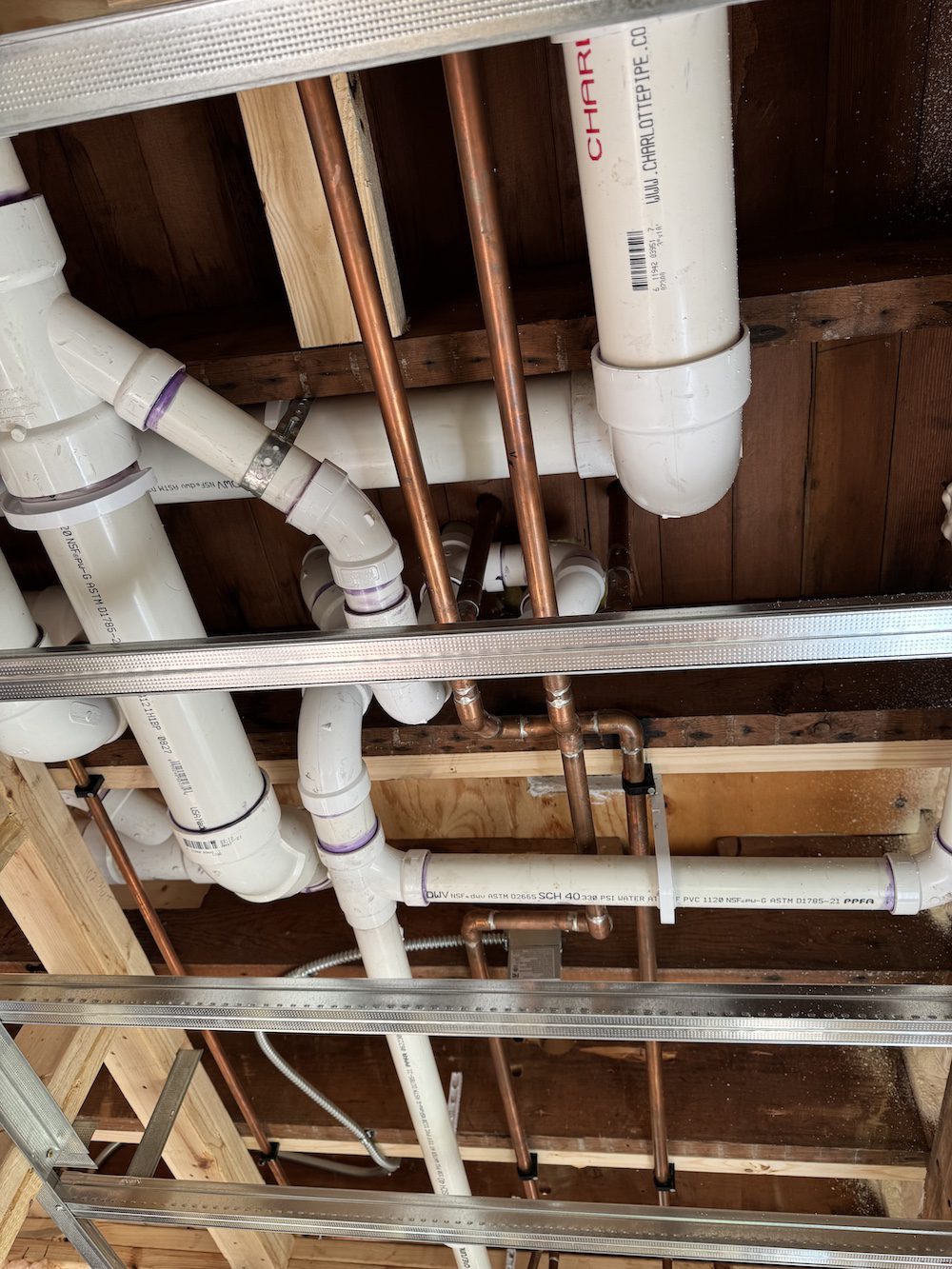
Correct pipe transition fittings for bathroom plumbing repair in Elgin IL

When DIY Bathroom Plumbing Makes Sense and When It Doesn’t

We’re not here to talk you out of doing your own plumbing. Replacing a faucet, swapping a toilet fill valve, and clearing a hair clog with a hand snake — these are reasonable weekend projects for a careful homeowner. The This Old House guides on basic fixture replacement are genuinely solid for that level of work.

Where it gets risky is anything involving drain slope, venting, pipe material transitions, or work inside walls and floors. Illinois law under 225 ILCS 320 requires licensed plumbers for permitted work, and unpermitted plumbing work can create real problems when you sell your home. Beyond the legal side, a mistake inside a wall costs far more to fix than the original job would have cost to do right.

A good rule: if you’re not sure what you’re connecting to, or if the repair involves opening a wall, call first. A 10-minute phone conversation with a licensed plumber can save you a weekend of frustration and a much larger repair bill.

Signs Your Bathroom Plumbing Needs a Professional

  • Drain that’s slow even after snaking — could be a venting issue or a deeper blockage
  • Sewer smell in the bathroom — wax ring failure, dry trap, or venting problem
  • Water stain on the ceiling below an upstairs bathroom — active leak inside the floor/ceiling assembly
  • Low water pressure at one fixture — could be a failing valve, corroded galvanized pipe, or a supply line issue
  • Toilet that rocks or has soft flooring around the base — possible subfloor damage from a long-term wax ring leak
  • Any work that requires a permit under the Illinois code

Frequently Asked Questions About Bathroom Plumbing in Elgin

How much does a typical bathroom plumbing repair cost in Elgin?

It depends heavily on what’s wrong. A faucet replacement or toilet fill valve swap runs $150–$300, including labor. A drain cleaning service is typically $150–$250. More involved work — replacing a wax ring with flange repair, fixing a venting issue, or repairing a supply line inside a wall — can range from $300 to $800 or more, depending on access and materials. We give honest, upfront estimates before any work starts. Hard-water scale from Elgin’s high-mineral water supply can add time to some jobs, which is worth factoring in.

Can I legally do my own plumbing in Illinois?

Homeowners in Illinois can perform plumbing work on their own primary residence without a license for minor repairs and replacements — things like swapping a faucet, replacing a toilet, or fixing a supply line. However, any work that requires a permit (new drain lines, vent modifications, moving fixtures) must be done by or inspected by a licensed plumber under 225 ILCS 320, the Illinois Plumbing License Law. If you’re a renter or working on a rental property, different rules apply. When in doubt, a quick call to your local building department or a licensed plumber clarifies what’s required.

Why does my bathroom drain smell even after I cleaned it?

A persistent sewer smell after cleaning usually points to one of three things: a dry P-trap (the water seal has evaporated — common in guest bathrooms that don’t get used often), a failed or improperly seated wax ring at the toilet base, or a venting problem that’s allowing sewer gas to be drawn back through the drain. Running water in the fixture for 30 seconds refills a dry trap. If the smell persists after that, it’s time to have a plumber check the wax ring and vent stack. Sewer gas contains hydrogen sulfide and methane — it’s not something to ignore.

My bathroom faucet has low water pressure. Is that a DIY fix?

Sometimes. The most common cause of low pressure at a single bathroom faucet is a clogged aerator — the small screen at the tip of the spout. Unscrew it, rinse out the mineral buildup (Elgin’s hard water clogs these fast), and reinstall. That’s a two-minute fix. If cleaning the aerator doesn’t help, the issue could be a failing cartridge inside the faucet, a partially closed angle stop valve under the sink, or — in older homes — a corroded galvanized supply line that’s narrowed from the inside. The last one usually means it’s time to repipe that section. Our faucet and fixture service covers diagnosis and repair for all of these.

How do I know if my bathroom plumbing issue is an emergency?

Active water flow you can’t stop is always an emergency — shut off the angle stop valve under the fixture or the main shutoff, then call. A toilet that won’t stop running, a supply line that’s spraying, or water coming through a ceiling are all emergencies. Slow drains, minor leaks at a drain connection, and a running toilet that you can shut off at the valve are urgent but not emergencies — schedule them within a day or two before they get worse. Fox Valley Plumbing handles 24/7 emergency plumbing throughout Elgin and the Fox Valley area.

The Bottom Line on DIY Bathroom Plumbing in Elgin

Most bathroom plumbing problems in Elgin homes come down to a few recurring issues — hard water scale, aging pipe materials, and repairs that were done close but not quite right. The five mistakes above are fixable, and most of them are preventable with a little extra care and the right information before you start.

If you’ve run into one of these situations or you’re staring at a bathroom plumbing project and are not sure where to start, Fox Valley Plumbing & Backflow is a licensed Master Plumber operation that’s been serving Elgin and the Fox Valley area for over 15 years. We give straight answers, honest estimates, and we don’t upsell work you don’t need. Call us at (847) 624-3872 any time, or schedule service online. We’re here when you need us.

Licensed plumber performing toilet repair in Elgin IL bathroom

If you’ve been dealing with a constantly running toilet, an unexplained spike in your water bill, or a fixture that just won’t flush the way it should, you’re not alone. Toilet repair in Elgin IL is one of the most common calls we get at Fox Valley Plumbing, and the first question homeowners always ask is the same: “Should I fix this thing, or just replace it?”

We’ve been answering that question for Elgin homeowners for over 15 years. With more than 125 five-star reviews and a BBB A+ rating, the Fox Valley Plumbing team has seen just about every toilet problem imaginable — from a simple flapper swap to a full bathroom plumbing overhaul. The honest answer depends on a few key factors: how old your toilet is, what’s actually broken, and whether the repair cost makes financial sense long-term. This guide breaks it all down in plain language so you can make a confident decision before spending a dime.

Quick tip: If your toilet is under 10 years old and the problem is a worn flapper or fill valve, repair is almost always the right call. If it’s pushing 20 years or has cracked porcelain, start budgeting for a replacement.

The Most Common Toilet Problems (And Whether They’re Worth Fixing)

Before you panic or reach for a credit card, it helps to know what you’re actually dealing with. Most toilet problems fall into a handful of predictable categories, and many of them are straightforward repairs.

Running Toilet

A running toilet is one of the sneakiest plumbing problems in any home. It rarely floods, so people ignore it — but a toilet that runs constantly can waste up to 200 gallons of water every single day. That’s $50 or more added to your monthly water bill without you even noticing.

The good news? Running toilet repair is usually simple and inexpensive. Nine times out of ten, the culprit is a worn flapper valve or a faulty fill valve — both are cheap parts that a plumber can swap out in under an hour. This is a clear “repair” situation.

Weak or Incomplete Flush

If your toilet needs two flushes to do the job of one, the issue is typically a clogged rim jet, a low water level in the tank, or a partially blocked drain. All of these are repairable. Clogged rim jets can be cleared chemically or manually, and water level adjustments take minutes.

Toilet That Rocks or Leaks at the Base

A toilet that wobbles or shows water pooling around the base has a failed wax ring seal. Left alone, this will rot your subfloor and potentially cause mold. A wax ring replacement costs $150–$300 with labor — a worthwhile repair if the toilet itself is in good shape.

Cracked Tank or Bowl

This one is different. A crack in the porcelain — even a hairline crack — is a red flag. Porcelain doesn’t repair reliably, and an ongoing, slow leak will damage the flooring over time. If the crack is in the bowl itself, replacement is the only sound option.

How Toilet Age and Water Efficiency Factor Into the Decision

toilet repair, Elgin IL, running toilet, bathroom plumbing in Elgin IL home


Here’s something a lot of homeowners don’t think about: even if your old toilet isn’t broken, it might be costing you money every single month.

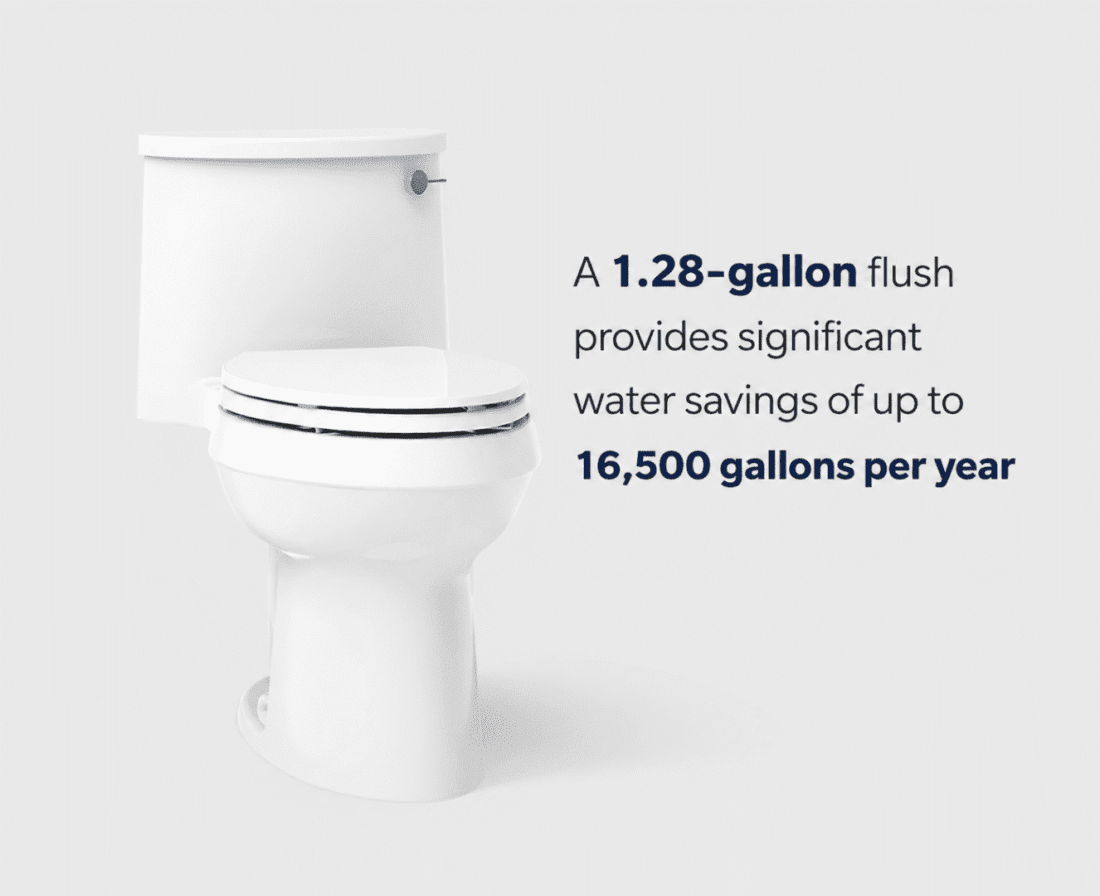
Toilets manufactured before 1994 use 3.5 to 7 gallons per flush (GPF). Modern EPA WaterSense-certified toilets use just 1.28 GPF — that’s a savings of up to 60% on toilet-related water use. For a family of four, that can add up to $100+ per year.

If your toilet was installed before the turn of the millennium and you’re already dealing with repair costs, that’s a strong signal to replace rather than sink more money into an inefficient fixture.

The Age Rule of Thumb

  • Under 10 years old: Repair is almost always the right move. Parts are available, and the fixture has plenty of life left.
  • 10–20 years old: Evaluate the repair cost. If you’re looking at more than $200–$300 in repairs, replacement starts to make financial sense.
  • Over 20 years old: Unless the toilet is in flawless condition, replacement usually wins. You’ll recoup the cost in water savings and avoid a cascade of future repairs.

Repair vs. Replace: A Quick-Reference Guide for Elgin Homeowners

Still on the fence? This table covers the most common scenarios and gives you a clear starting point before calling for bathroom plumbing services in Elgin.

Situation Recommendation Why
Running toilet (faulty flapper or fill valve) ✅ Repair Cheap part, quick fix — usually under $150 total.
Weak flush / clogged rim jets ✅ Repair Easily cleared; no structural issue.
Toilet rocks (failed wax ring) ✅ Repair Straightforward fix if porcelain is intact.
Cracked bowl or tank ❌ Replace Porcelain can’t be reliably patched long-term.
Toilet over 20 years old ❌ Replace Water savings alone often justify a new unit.
Repeated repairs within 12 months ❌ Replace You’re approaching the cost of a new toilet anyway.
Pre-1994 high-flow toilet ❌ Replace Upgrade to WaterSense and start saving immediately.
Toilet under 10 years, single repair needed ✅ Repair Plenty of life remaining; no reason to replace.

When to Stop DIYing and Call a Plumber for Toilet Installation Near You

YouTube has made a lot of homeowners more confident about DIY plumbing — and that’s not a bad thing. Swapping a flapper valve is genuinely something most people can handle. But there’s a category of toilet work where calling a licensed plumber is the smarter and safer play.

Call a Pro When:

  • You’re installing a brand-new toilet (improper installation leads to leaks, rocking, and wax ring failure)
  • There’s visible water damage around the base or under the floor
  • You suspect a clog beyond the toilet trap — it may be in the main drain line
  • The shut-off valve behind the toilet won’t close completely
  • You’re upgrading to a bidet toilet or smart toilet with electrical requirements
  • The toilet is in a tight space, upstairs bathroom, or involves subfloor work

Searching for “toilet installation near me” in Elgin? Fox Valley Plumbing’s licensed technicians handle installs and complex repairs across the Fox Valley area — typically with same-day availability.

What to Expect: Costs, Timeline, and What a Plumber Will Do

Fox Valley Plumbing technician installing a new toilet in Elgin IL bathroom

Typical Repair Costs

  • Flapper or fill valve replacement: $75–$150
  • Wax ring replacement: $150–$300
  • Handle or flush valve repair: $80–$175
  • Running toilet diagnosis + repair: $100–$200

Typical Installation Costs

  • Standard toilet installation (labor only): $150–$350
  • Toilet + installation (mid-range fixture included): $400–$800
  • High-efficiency or comfort-height upgrade: $500–$1,200

These are general ranges. Actual pricing can vary based on your home’s plumbing setup, local permit requirements, and whether any subfloor or supply line work is needed. A reputable plumber — like the team at Fox Valley Plumbing — will give you a clear upfront estimate before any work begins.

What the Process Looks Like

  1. A technician arrives, inspects the toilet and surrounding plumbing, and diagnoses the issue.
  2. You receive a written estimate before any work starts.
  3. If repairing, parts are typically on the truck, and work is completed on the same visit.
  4. If replacing, your plumber removes the old unit, sets and levels the new toilet, installs a fresh wax ring, connects the supply line, and tests for leaks.
  5. Old toilet disposal is handled — you don’t have to figure out how to get rid of 80 pounds of porcelain.

Choosing a Replacement Toilet: What Elgin Homeowners Should Know

If you’ve decided replacement is the way to go, the market has genuinely improved. Today’s toilets are quieter, more efficient, and far more comfortable than older models. Here are the features worth paying attention to:

  • WaterSense Certification: Look for the EPA WaterSense label. These toilets use 1.28 GPF or less and can save a household roughly 13,000 gallons per year.
  • Comfort Height (ADA): Also called “right height” toilets — the seat sits 17–19 inches from the floor, which is easier on knees and hips. Highly recommended for anyone over 50 or with mobility concerns.
  • Elongated vs. Round Bowl: Elongated bowls are more comfortable for most adults; round bowls are better for smaller bathrooms where space is tight.
  • Dual Flush: One flush setting for liquid waste (0.8 GPF), another for solid waste (1.6 GPF). A great middle ground if maximum water savings is a priority.
  • Rough-in Size: Most homes have a 12-inch rough-in (distance from wall to drain center). Measure before you buy — the wrong rough-in size means the toilet won’t fit properly.

Pro tip from Fox Valley Plumbing: Don’t buy a toilet from a big-box store and then call a plumber to install it without checking first. Some brands and models have known installation quirks. We’re happy to recommend fixtures that we know install cleanly and last — just ask when you call.

Why Hiring a Local Elgin Plumber Matters More Than You Think

When your toilet is acting up, it’s tempting to just call whoever shows up first on Google. But there’s a real difference between a local plumber who knows the Elgin area and a large national dispatch service.

Local plumbers know the age of the housing stock in your neighborhood, the quirks of older drain systems common in Fox Valley homes, and what products hold up in the Midwest climate. They also tend to show up faster, charge fairly, and stand behind their work — because their reputation is built entirely on local word of mouth.

Fox Valley Plumbing has been serving Elgin and the surrounding Fox Valley communities for over 15 years. Based right here at 953½ Grace St in Elgin, our licensed and insured technicians know the specific plumbing challenges that homeowners in this area face. We hold a 4.8-star Google rating across 125+ reviews and a BBB A+ accreditation — and we back every job with honest upfront pricing. Whether you need a quick running toilet repair or a full bathroom plumbing service, we’re a call away at (847) 624-3872.

You can also learn more about local plumbing codes and water quality in Elgin through the City of Elgin Water Department. Understanding your local water supply — including its hardness level — can actually help you predict how quickly toilet components will wear out.


Need Toilet Repair in Elgin IL? We’re Ready to Help.

Fox Valley Plumbing offers same-day and 24/7 emergency toilet repair and installation throughout Elgin, South Elgin, Bartlett, Streamwood, Hanover Park, and the entire Fox Valley area. Licensed, insured, BBB A+ rated — and upfront with pricing, always.

📞 Call (847) 624-3872 Now

Frequently Asked Questions About Toilet Repair in Elgin IL

How much does toilet repair cost in Elgin IL? Most toilet repairs in Elgin IL range from $75 to $250, depending on the part and labor involved. Simple fixes like a flapper or fill valve replacement sit at the lower end, while a cracked tank or wax ring replacement can push toward the higher end. Fox Valley Plumbing provides a written estimate before any work begins, so there are no surprises.

How do I know if my toilet needs to be replaced? If your toilet is over 20 years old, requires frequent repairs, uses more than 3.5 gallons per flush, or shows hairline cracks in the porcelain, replacement is usually the smarter investment. A licensed plumber can give you a professional opinion after a quick inspection.

Can a running toilet really increase my water bill that much? Absolutely. A running toilet can waste up to 200 gallons of water per day. Over a month, that adds up to 6,000 gallons, which can add $50 or more to your water bill, depending on Elgin’s current water rates. Running toilet repair is almost always a worthwhile same-day fix.

How long does toilet installation take? A professional toilet installation typically takes 1–2 hours from start to finish. That includes removing and disposing of the old unit, setting the new toilet with a fresh wax ring, connecting the supply line, and testing everything for leaks.

Do you offer same-day toilet repair near me in Elgin? Yes. Fox Valley Plumbing offers same-day and 24/7 emergency plumbing services throughout Elgin, South Elgin, Bartlett, Streamwood, Hanover Park, and surrounding Fox Valley communities. Call (847) 624-3872 and we’ll dispatch a licensed plumber as fast as possible.

What should I do while waiting for a plumber if my toilet is overflowing? Reach behind the toilet and turn the shut-off valve clockwise until it stops — this cuts the water supply to the tank and stops the overflow. If the valve is stuck or broken, locate your home’s main water shut-off and turn that off instead. Then call Fox Valley Plumbing for emergency service.


More Helpful Resources from Fox Valley Plumbing


Fox Valley Plumbing is a licensed and insured plumbing company based in Elgin, IL (953½ Grace St, Elgin IL 60120) with over 15 years of experience serving the Fox Valley area. We hold a 4.8-star Google rating (125+ reviews), a BBB A+ accreditation, and offer 24/7 emergency service. Our technicians specialize in toilet repair, drain cleaning, water heater service, sump pump repair, and sewer line work for residential and commercial customers throughout Elgin, South Elgin, Bartlett, Streamwood, and Hanover Park. Learn more about our team.

Shower water filters are the types of equipment installed to cleanse the water for the shower. They provide great safety against harmful chemicals and sediments. These harmful chemicals go through the plumbing lines in a shower faucet. Water pouring in from the showerhead is contaminated with high chlorine content that can prove to be harmful to skin, lungs, and hair. Never forget that municipal water is already treated with chlorine and has been subjected to processes that supposedly make it safe.

Call Us At (847) 624-3872

Shower water filters not only eradicate chlorine but also remove dirt and bad odor. In hard water areas, it has been evident that small pieces of sand, or rock, dissolve in water through the water lines. That is why anyone who has fitted water filter faucets or traps on their faucets is bound to clean out the tiny particles once a week. If not, then this will lead to blockage of the filters. Shower water filter cartridges generally work for 6 to 9 months providing clean shower water.

Generally, shampoo removes the oil from your hair, but when it is dissolved with water containing chlorine and sediments, its purpose is comprehensively lost. Most people have become vulnerable to chemicals and various other foreign matters on their skin. Shower water filters ensure that your fitted shower never gets clogged with foreign materials, and also protect your hair, skin, and body by cleaning the water through water decontamination filters.

The prime aim of the shower filters is to lower down the toxic and chlorine content in the water. It is advisable to install a shower water filter that can eliminate the contaminants by 90% making water fit for showering. The majority of the shower water filters are easy to use, install, and also to maintain.

Shower water filters are environmentally friendly and also perform well at any water temperature providing a positive response to your skin and hair. Thus, keeping all the mentioned points in mind it is wise to buy a shower water filter. Instead of spending dollars on cosmetics to hide skin stains as they are the result of various harmful chemicals present in the water, that’s why shower water filters radically minimize the risk of skin stains.

Call Us At (847) 624-3872

Whether you are a bathtub or shower person, most people look for shower-only options when buying a home. This simple fact means more than a few homeowners spend a weekend upgrading or installing showers in their bathrooms. Fortunately for you, it is a fairly simple process.

A collector or pan refers to the horizontal surface located at the bottom of the shower. The collector typically consists of a non-slip surface slightly banked towards the center or wherever the drain is located. Combined with three to four-inch walls around the side, the goal of your shower drainage plumbing is to get the water to flow to and down the drain.

Call Us At (847) 624-3872

You can physically build a collector for your new shower, but you really need to think about it. Do you really want to get into the complications of getting the sloping correct, not to mention making sure every aspect of it is waterproof? And I mean every aspect!

It is much easier to simply buy a pre-cast collector online or at your local Palatine, IL Lowes, Home Depot, or hardware store. Building one might sound like a great idea, but you will probably feel differently after a couple of hours.

Regardless of how you go about getting a pan, you should make every effort to use one that has the drain located in the same spot as the original pan. Moving the drain pipes can be a task, particularly if the builder used a unique framing structure. If you are determined to move the drain, you are going to have to cut back the pipe or lengthen it, which may mean ripping up large chunks of the floor. Put another way, you are going to be looking at a multiple weekend project.

Assuming we have our drain lined up, the actual hook-up is fairly simple. The drainage pipe should be facing vertically up to the collector. It will often look like a “U”, which means it acts as a cleanout to keep nasty smells from coming back up from the drain.

Call Us At (847) 624-3872

To connect the drain, you are going to create a water-tight connection between a drain cap on the top of the pan and the drainage pipe. Systems vary, but you are typically going to do this by putting a coupling piece on the top of the drainage pipe. This is then covered with gaskets and literally screwed into the drain cap. The drain cap should act as a locknut, to wit, it screws directly onto the coupling.

The tricky part of this process is getting your drain cap to fit into a watertight position in the pan. This is accomplished by backing off the drain cap once you are sure everything fits together. At that point, you put plumbers putty around the underside of the cap and then screw it back on. The putty should form a tight seal between the cap and the shower pan, which keeps water from trickling under it and into the framing under the shower.

Obviously, bathroom showers come in a wide variety of styles these days. If you purchase a collector, they almost always come with plumbing instructions or the store can note anything unusual you should know. It sounds complex but is typically pretty straightforward. Have fun!

Call Us At (847) 624-3872

The kitchen is the heart of many homes. This is the room where the family prepares and shares meals together. Because so much time is spent here, the fixtures and accessories need to be functional and fit with the style of the room. The kitchen faucets in the sink and kitchen islands are made with style in mind. With so many choices, you are sure to find the right fit for your home. Most people match the fixtures to the style of kitchen cabinets.

Call Us At (847) 624-3872

Styles of Kitchen Faucets

The sink faucet use to be merely functional; the purpose was to deliver water to sinks for cooking or cleaning. Nobody really thought about what it looked like or if it matched the dÈcor in the room. Those days are over. Kitchen fixtures are now available in a range of finishes and styles to match every home.

Some of the available finishes include:

+ Brass (natural is more popular than polished)
+ Weathered brass
+ Nickel
+ Bronze
+ Antique copper
+ Brushed nickel
+ Stainless steel
+ Porcelain
+ Chrome
+ Black

The brushed and weathered look is more popular than the shiny, polished finishes. The polished chrome faucet is most often used in contemporary style kitchens now. Elaborate Victorian designs are available for more formal-looking kitchens. Their use as a design feature has resulted in fixtures being one of the most popular upgrades for people purchasing a new home.

If your home has boring fixtures that seem out of date or don’t match your home, replacing them is easy and inexpensive. Just make it part of a small home improvement and decoration project. The price for replacements varies and the finish plays a role in the price. Chrome is the least expensive and most durable material used. Other materials can be quite a bit more expensive and require extra care.

Visit your local plumbing or home improvement store in Schaumburg and surrounding areas to see the various styles available. Fox Valley Plumbing can replace or fix your faucet.

Call Us At (847) 624-3872

Installation Procedures

The new faucets are easier to install than older models. Most manufacturers include all connections and fittings needed to install the unit yourself. Complete installation instructions are included with the faucet. Look for complete kits that come with the flexible hoses needed to attach to your water supply.

If these aren’t included, you will need to purchase them separately. Don’t be alarmed if you notice particles in the water when you finish the installation. These are just particles trapped in the fixture from manufacturing and installation. They will rinse clear if you let the water run for a few minutes.

Kitchen Faucets: Repair and Maintenance

Repairing and maintenance are easier than ever before and can be done by a handy homeowner. Rubber rings can be easily replaced at home when needed. Before working on the sink, turn off the water and cover the drains. Properly cleaning and maintaining your faucet will extend the life and keep it in good working order.

Check the manufacturer’s directions for cleaning the finish. Most can be cleaned with mild soap and water or window cleaner. Don’t use harsh cleaning products, which can damage the finish. Polish matte finishes with furniture polish. Check the label to be sure the product you use is safe for the material of your fixtures.

Shower and Bathroom Fixtures

The combination of style and function found in kitchen fixtures has extended into the bathroom as well. There is a wide variety of choices available in shower faucets. You can choose the standard wall mount faucet or go for a removable head. Many can be adjusted to regulate the water flow according to your preference.

There are two basic choices in handles: pull-out and individual knobs. Some people find one handle to be more convenient and easy to use. Two handles are more stylish and a variety of styles are available in the handles. You should choose according to the style of your sink or bathtub. Faucets can be matched for the tub and sink if you choose.

Call Us At (847) 624-3872

Call Us At (847) 624-3872

Call Us At (847) 624-3872