
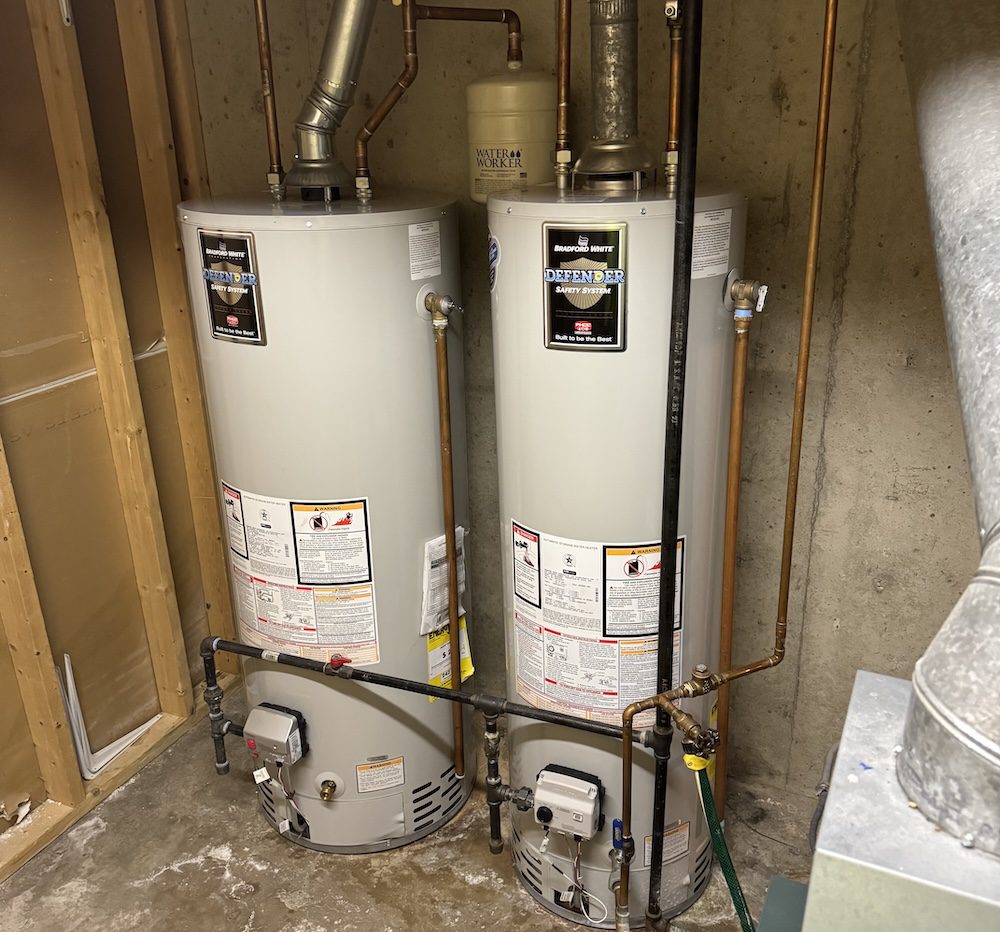
Thanksgiving morning. Six people are sleeping in your house. Your sister-in-law is first in the shower at 6:45 a.m., your brother-in-law is right behind her, and by the time your kids are up, the hot water is gone. The turkey still needs to go in. The dishes from last night are sitting in the sink. And your water heater — the one you haven’t thought about since last winter — is quietly struggling in the utility room.
This is the moment most Elgin homeowners realize they should have called a plumber two weeks ago. If you’re reading this before the guests arrive, you’re in good shape. Let’s figure out where your water heater actually stands — and whether a quick repair will carry you through the holidays or whether it’s time to have a harder conversation about replacement.
Why the Holidays Are the Hardest Week Your Water Heater Will Have All Year
A standard 40-gallon tank water heater is sized for a household of three to four people. It heats a full tank, holds it at temperature, and recovers in roughly 45 to 60 minutes after heavy use. That math works fine on a normal Tuesday. It falls apart fast when you’ve got eight people cycling through showers, a dishwasher running twice a day, and someone doing a load of laundry at the same time.
Elgin’s water is also genuinely hard — typically 15 to 25 grains per gallon. That hardness deposits calcium and magnesium scale on the bottom of your tank and on the heating elements. Over time, that sediment layer acts like insulation between the burner and the water. The unit works harder, heats slower, and recovers less efficiently. A water heater that was “fine” in October can feel completely inadequate when demand doubles in November.
The good news: if you catch the warning signs now, water heater repair is usually straightforward and fast. The bad news: if you ignore them until the Thursday before Thanksgiving, your options get expensive and your timeline gets tight.
Warning Signs Your Water Heater Needs Attention Before Guests Arrive
You don’t need a plumber to do a first-pass check. Walk down to your utility room and spend five minutes looking and listening. Here’s what matters:
You’re Running Out of Hot Water Faster Than You Used To
If your showers used to last 15 minutes and now you’re cold at 8, that’s almost always sediment buildup reducing your effective tank capacity. A professional flush and inspection can restore a meaningful amount of that lost performance — sometimes dramatically so. This is one of the most common water heater repairs we do in the fall, and it’s also one of the most satisfying because the homeowner notices the difference immediately.
You Hear Rumbling, Popping, or Banging From the Tank
That noise is sediment on the tank floor getting superheated and cracking. It sounds alarming, and it should — it means your burner is working overtime to push heat through a layer of mineral buildup. Left alone, it accelerates wear on the tank lining and can eventually cause a leak. A flush addresses it if you catch it early enough. If the tank lining is already compromised, you’re looking at replacement.
The Water Looks Rusty or Smells Metallic
Rust-colored hot water is a serious sign. It usually means the sacrificial anode rod — the magnesium or aluminum rod inside the tank that prevents corrosion — has been depleted and the tank itself is starting to corrode from the inside. Anode rod replacement is an inexpensive repair that can add years to a tank’s life if you catch it before the corrosion spreads. If the tank is already rusting through, no repair fixes that.
There’s Moisture or Pooling Water Around the Base
A small amount of condensation is normal. Actual pooling water is not. It can mean a failing pressure relief valve (a safety component — never ignore this), a loose fitting, or a crack in the tank itself. Don’t wait on this one. A leaking tank can fail completely with very little additional warning.
The Unit Is 10 Years Old or More
The average conventional tank water heater lasts 8 to 12 years. In Elgin’s hard water, that range skews toward the lower end without regular maintenance. If your unit is pushing a decade and showing any of the symptoms above, the repair-versus-replace conversation is worth having now — before the holidays, not during them. Check the serial number on the label; most manufacturers encode the manufacture date in the first four characters.

What Water Heater Repair Actually Involves (and What It Costs)
One of the things that keeps homeowners from calling is not knowing what they’re walking into. Here’s an honest breakdown of the most common repairs and what to expect.
Tank Flush and Sediment Removal
This is maintenance, not emergency repair, but it makes a real difference in performance and longevity. A plumber connects a hose to the drain valve, flushes the sediment out, and inspects the anode rod while they’re in there. In Elgin’s hard water, this should happen every one to two years. If it’s never been done on a 7-year-old tank, expect a significant flush. Cost is typically in the $100–$200 range depending on the unit and condition.
Anode Rod Replacement
The anode rod is the unsung hero of your water heater. It corrodes so the tank doesn’t have to. Replacing a depleted rod is a straightforward repair — usually under an hour — and it’s one of the highest-value maintenance items on a tank heater. Expect to pay $150–$300 for parts and labor.
Thermostat or Heating Element Replacement
On electric water heaters, a failed heating element is a common reason for lukewarm or cold water. On gas units, a faulty thermocouple or gas valve can cause similar symptoms. These are real repairs — not DIY territory — but they’re also not expensive. Most fall in the $150–$400 range and can be completed in a single visit.
Pressure Relief Valve Replacement
The T&P (temperature and pressure) relief valve is a safety device. If it’s leaking, dripping, or hasn’t been tested in years, it needs to be replaced. This is not optional — a failed T&P valve is a safety hazard. The repair itself is inexpensive (usually under $200), but it needs to be done by a licensed plumber who can verify the new valve is correctly rated for your unit.
When Repair Doesn’t Make Sense Anymore
If your tank is over 10 years old, showing rust, and needs a significant repair, the math often favors replacement. A new 40- or 50-gallon unit installed typically runs $900–$1,500 depending on the model and your existing setup. A tankless water heater costs more upfront but eliminates the “ran out of hot water” problem entirely — it heats on demand, so the eighth shower is as hot as the first. That’s worth considering if you host regularly.
The This Old House cost guide on water heater replacement is a solid reference if you want to benchmark what’s reasonable in your area before you call anyone.
What a Pre-Holiday Water Heater Inspection Looks Like
When we come out for a water heater inspection, here’s what actually happens. We check the flue or venting (on gas units) for blockages or improper draft. We test the T&P valve. We inspect the anode rod. We check the thermostat setting — most manufacturers recommend 120°F, which is hot enough for effective use and low enough to reduce scalding risk and slow mineral buildup. We look at the condition of the tank exterior and the connections. And we flush sediment if the unit warrants it.
The whole visit is usually 45 minutes to an hour. You get a clear picture of where your unit stands and honest advice on whether repair, maintenance, or replacement makes the most sense. No pressure, no upsell. That’s how we’ve operated for 15 years in this area.
Illinois plumbing work — including water heater installation and repair — must be performed by a licensed plumber under Illinois Department of Public Health regulations and IAPMO plumbing standards. Our license numbers are IL #058-161084 (Master Plumber) and IL #055-042593 (Plumbing Contractor). You can verify any plumber’s license before you let them touch your water heater.
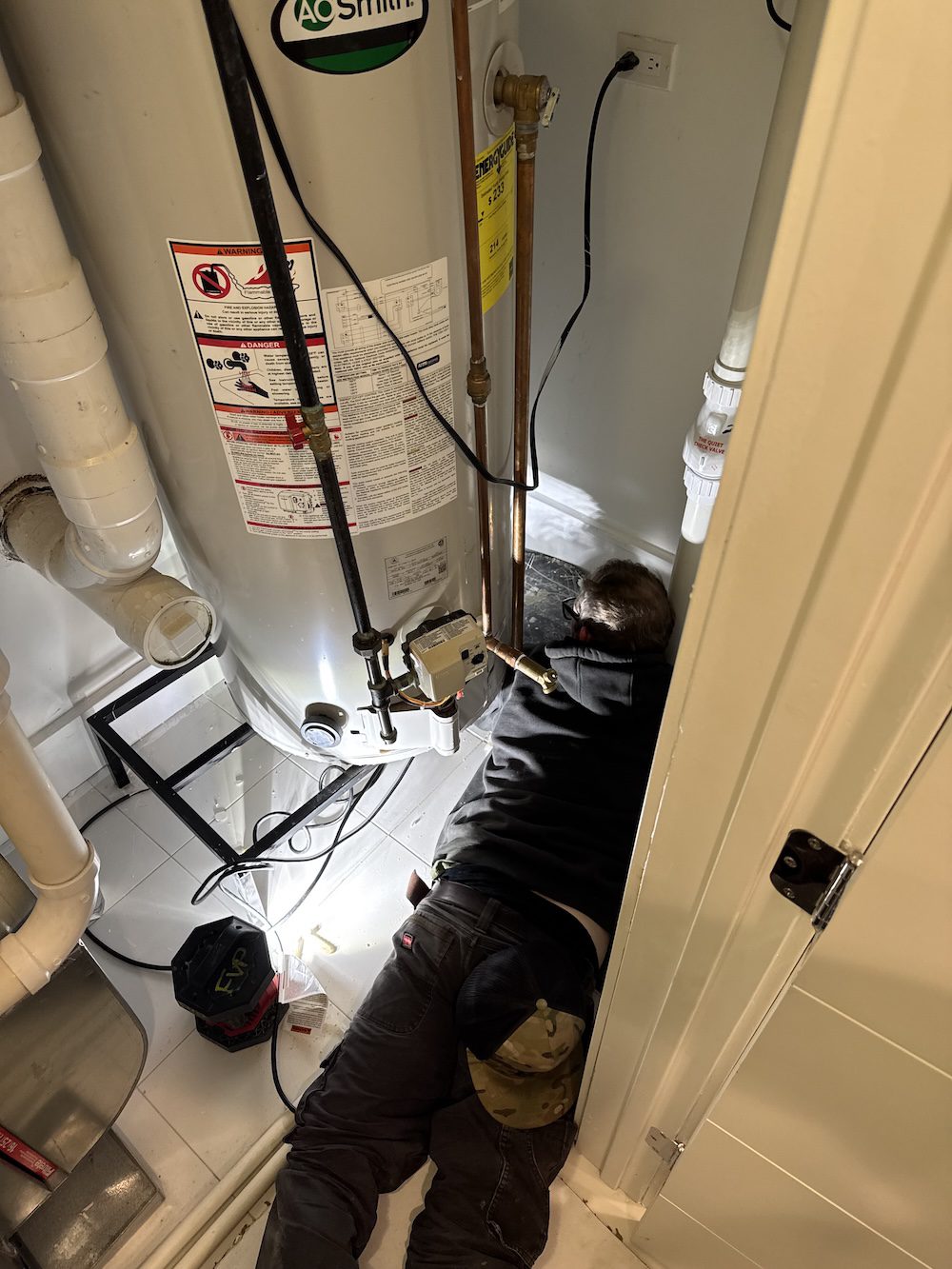
One More Thing Worth Knowing: Tankless Isn’t Magic, But It Might Be Right for You
Tankless water heaters heat water on demand — no stored tank, no standby heat loss, no “we ran out.” For a household that hosts frequently, or one where the existing tank is undersized for the family’s normal routine, a tankless unit is genuinely worth the conversation. The upfront cost is higher, and proper sizing matters (an undersized tankless unit will disappoint you just as fast as an old tank), but the long-term performance and efficiency gains are real.
If you’re already facing a water heater replacement before the holidays, it’s worth asking whether a tankless unit makes sense for your home. We can walk you through the options — including what your gas line and venting situation can support — without pushing you toward the more expensive choice if it doesn’t fit your situation. Learn more about water heater repair and installation options we offer, or read about tankless water heater installation if you want to understand what that upgrade actually involves.
The U.S. Department of Energy’s water heating efficiency guide has useful, unbiased information on comparing tank versus tankless operating costs if you want to do your homework before the call.
Frequently Asked Questions
How long does a water heater repair take?
Most common repairs — anode rod replacement, heating element swap, thermostat replacement, T&P valve replacement — are completed in a single visit of one to two hours. A tank flush and inspection is typically under an hour. If we need to order a part that isn’t on the truck, we’ll tell you upfront and schedule a return visit. We don’t leave you without hot water while we wait on parts if there’s a workaround.
My water heater is 8 years old and running fine. Should I still have it inspected before the holidays?
Yes — especially in Elgin’s hard water. Eight years is the point where sediment buildup and anode rod depletion start to matter. A unit that’s “running fine” under normal demand can fall short fast when you double the household size for a week. An inspection gives you a clear picture of where it stands and catches small issues before they become holiday emergencies. It’s a much easier conversation to have in early November than on Thanksgiving morning.
What temperature should my water heater be set to when I have guests?
The standard recommendation is 120°F. That’s hot enough for effective showering, dishwashing, and laundry, and it reduces the risk of scalding — important if you have young kids or elderly guests. Some dishwashers require 130°F to sanitize effectively; check your appliance manual. Going higher than necessary accelerates mineral scaling and increases standby heat loss, so there’s no benefit to cranking it up “just in case.”
Can I flush my own water heater to improve performance before guests arrive?
Technically yes, but with caveats. If the drain valve hasn’t been opened in years, it may be corroded and prone to leaking once disturbed — or it may not close fully afterward. If the unit is older or the sediment is heavy, a DIY flush can stir up debris that clogs the valve. A plumber can flush the unit safely, inspect the valve condition first, and replace it if needed. For a unit you haven’t maintained in a while, a professional flush is the lower-risk choice.
Is there a difference between a water heater repair and a water heater tune-up?
In practice, they often overlap. A “tune-up” or maintenance visit typically includes a flush, anode rod inspection, T&P valve test, and thermostat check. If we find something that needs fixing during that visit — a depleted anode rod, a dripping valve — we repair it on the spot. Think of it as a physical for your water heater: we’re looking for problems before they find you. Most homeowners who call for a tune-up are glad they did, because we almost always find at least one thing worth addressing.
Don’t Let a Cold Shower Be the Thing Your Guests Remember
You’ve got enough to manage during the holidays without your water heater becoming the story. If your unit is more than seven or eight years old, making noise, running out of hot water faster than it used to, or showing any rust or moisture around the base — call now, before your schedule fills up and ours does too.
Fox Valley Plumbing & Backflow has been handling water heater repair and installation across Elgin, South Elgin, Bartlett, St. Charles, and the surrounding Fox Valley communities for over 15 years. We’re licensed, we’re honest about what your unit actually needs, and we’re not going to sell you a replacement when a repair will do the job. If you want a straight answer about where your water heater stands, schedule an inspection online or call us directly at (847) 624-3872. We’ll get out there before the guests do.




Leave a Reply
Want to join the discussion?Feel free to contribute!