
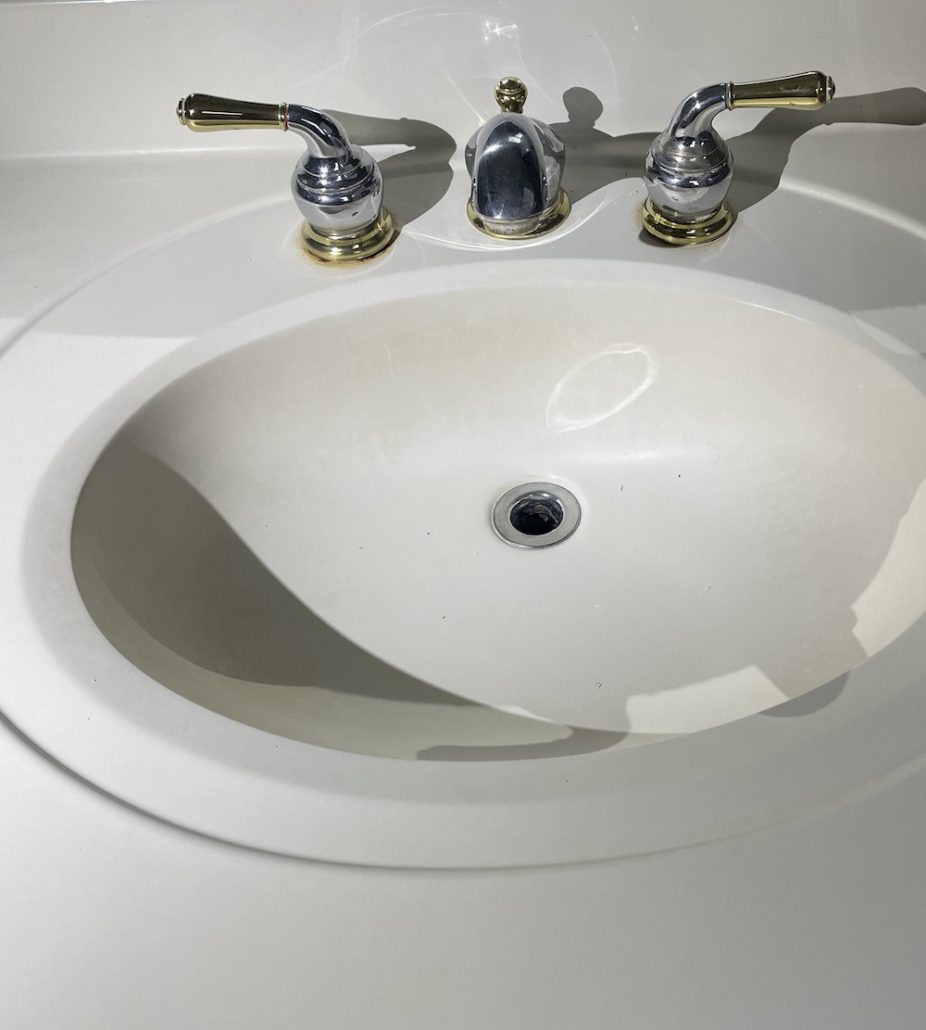
You noticed a slow drain on Saturday morning. By noon, you were elbow-deep under the vanity, YouTube video paused on your phone, wondering why the P-trap you just replaced is still dripping. Sound familiar? Bathroom plumbing in Elgin homes trips up even handy homeowners — not because the work is impossible, but because a few small missteps turn a $12 fix into a $400 call. This post walks you through the five most common DIY bathroom plumbing mistakes we see in Elgin and the surrounding Fox Valley area, and exactly what to do instead. Some of these you can absolutely handle yourself. Others are worth a quick call to a licensed plumber before things get worse.
Mistake #1: Over-Tightening Fittings and Supply Lines
This is the number-one rookie error, and it happens to experienced DIYers, too. The instinct is logical — if a little is good, really tight must be better. It isn’t. Plastic fittings on toilet fill valves, P-trap nuts, and compression fittings on supply lines crack under too much torque. Brass fittings strip. Ceramic valve seats inside faucets shatter.
The plumbing rule of thumb is “hand-tight plus a quarter turn” for most compression and slip-joint fittings. For threaded metal connections, two to three wraps of PTFE (Teflon) tape and snug-with-a-wrench is enough. If you’re cranking with both hands and a pipe wrench on a plastic nut, stop.
Elgin’s water hardness runs between 15 and 25 grains per gallon — that’s genuinely hard water. Mineral deposits can make old fittings feel stuck, which tempts people to force them. If a fitting won’t budge, soak it with white vinegar or a penetrating lubricant for 20 minutes before applying more force. Forcing a calcified fitting almost always ends in a cracked seat or a snapped line.
If you’ve already cracked a supply line or fitting, shut off the angle stop valve under the fixture immediately and contact Fox Valley Plumbing before the slow drip becomes a flooded cabinet.
Mistake #2: Ignoring Proper Drain Slope (and Venting)
A lot of homeowners who tackle bathroom drain work — replacing a section of drain pipe, moving a vanity, adding a second sink — focus entirely on getting the pipes to connect. What they miss is slope and venting, and both matter enormously.
Drain pipes need a consistent fall of ¼ inch per foot toward the main stack. Too little slope and waste sits in the pipe, causing slow drains and odors. Too much slope and the water races ahead of the solids, leaving debris behind — same result, different cause. If you’re eyeballing it, you’re probably wrong. Use a level.
Venting is the part that really catches people off guard. Every fixture drain needs a vent to allow air into the system so water can flow freely and sewer gases can escape outside rather than into your bathroom. Under Illinois plumbing code (77 Ill. Adm. Code 890), vent requirements are specific — distance from the trap to the vent, pipe sizing, tie-in location. A drain that gurgles, drains slowly, or lets sewer smell into the room is almost always a venting problem.
This is one area where a quick consultation with a licensed plumber before you start the project saves a lot of rework. Our residential plumbing services include exactly this kind of rough-in guidance.
Mistake #3: Using Chemical Drain Cleaners on Slow Drains
We hear this one constantly: “I poured Drano down it and now it’s worse.” Chemical drain cleaners — the liquid and gel varieties you grab at the hardware store — are one of the most misunderstood products in home maintenance. They work on some clogs, some of the time. But the chemistry that dissolves hair and soap scum also eats away at older pipe materials, degrades rubber gaskets, and can actually lock a partial clog into a solid mass if the product doesn’t fully clear it.
In Elgin homes built before the 1980s, you may still have cast-iron drain lines or older ABS plastic. Repeated chemical treatments accelerate corrosion in cast iron and can warp ABS joints. If you have a slow bathroom drain, a drain snake (also known as a hand auger) is almost always a better first option than chemicals. A 25-foot hand snake costs about $30 at any hardware store and clears the hair-and-soap clogs that cause 90% of bathroom drain slowdowns.
If the snake doesn’t fix it, the clog is likely deeper, or there’s a bigger issue — such as root intrusion, a partial collapse, or a venting problem. That’s when professional bathroom drain cleaning makes sense. We can run a camera down the line and know exactly what you’re dealing with before touching anything.
One more thing: if you’ve already poured chemicals down a drain and it’s still slow, tell your plumber before they start work. Chemical residue in a drain is a safety hazard for anyone snaking or jetting the line.
Mistake #4: Skipping the Wax Ring Replacement (or Using the Wrong One)
Toilets get removed more often than people realize — to replace flooring, fix a leak at the base, clear a stubborn clog, or move the toilet during a bathroom remodel. Every single time a toilet comes off the floor, the wax ring must be replaced. Every time. The wax compresses when the toilet is set and cannot re-seal reliably once it’s been disturbed.
The mistake we see most often: homeowners reuse the old wax ring because it “looks fine,” or they buy the wrong size. Wax rings come in standard and extra-thick (double-wax) versions. If your toilet flange sits below the finished floor level — common after tile work — you need the thicker ring or a flange extender. Set a standard ring on a low flange, and you’ll have a slow sewer-gas leak at the base that’s nearly impossible to detect until the subfloor starts to rot.
Setting a toilet correctly also means checking that the flange itself is in good shape. A cracked or broken flange won’t hold the toilet bolts securely, and no wax ring compensates for that. Flange repair is a straightforward job for a plumber and not expensive — but it’s easy to miss if you’re focused on just swapping the toilet.
The International Association of Plumbing and Mechanical Officials (IAPMO) sets the standards for toilet installation that Illinois code references. Getting this right the first time protects your subfloor, your indoor air quality, and your water bill.
Mistake #5: Mismatching Pipe Materials Without the Right Transition Fittings
Elgin has a wide range of housing stock — bungalows from the 1920s, ranch homes from the 1960s, subdivisions from the 1990s and 2000s. That means bathroom plumbing in this area can include galvanized steel, copper, CPVC, PEX, and ABS drain pipe, sometimes all in the same house. When homeowners do repairs or upgrades, they often connect whatever new pipe they bought to whatever old pipe is there — without the correct transition fitting.
Connecting copper directly to galvanized steel without a dielectric union causes galvanic corrosion that eats through the connection in a few years. Gluing PVC to ABS with the wrong cement causes joints to fail. Running PEX into a high-heat zone near a recirculation line without the right fittings causes the pipe to soften and leak. These aren’t hypothetical — we fix them regularly.
Before you buy a pipe at the hardware store, know what you’re connecting to. If you’re not sure, take a photo and ask. Most plumbing supply counters (and honest plumbers) will tell you exactly what fitting you need. If the repair involves mixing materials in a wall or under a slab, it’s worth having a licensed plumber do it — not because it’s complicated, but because a failed joint inside a wall is a much bigger problem than the original repair.
For older Elgin homes with galvanized supply lines that are corroding from the inside out, a full residential repiping assessment is worth considering. Galvanized pipe from the pre-1960s era has a finite lifespan, and patchwork repairs eventually stop making financial sense.
When DIY Bathroom Plumbing Makes Sense and When It Doesn’t
We’re not here to talk you out of doing your own plumbing. Replacing a faucet, swapping a toilet fill valve, and clearing a hair clog with a hand snake — these are reasonable weekend projects for a careful homeowner. The This Old House guides on basic fixture replacement are genuinely solid for that level of work.
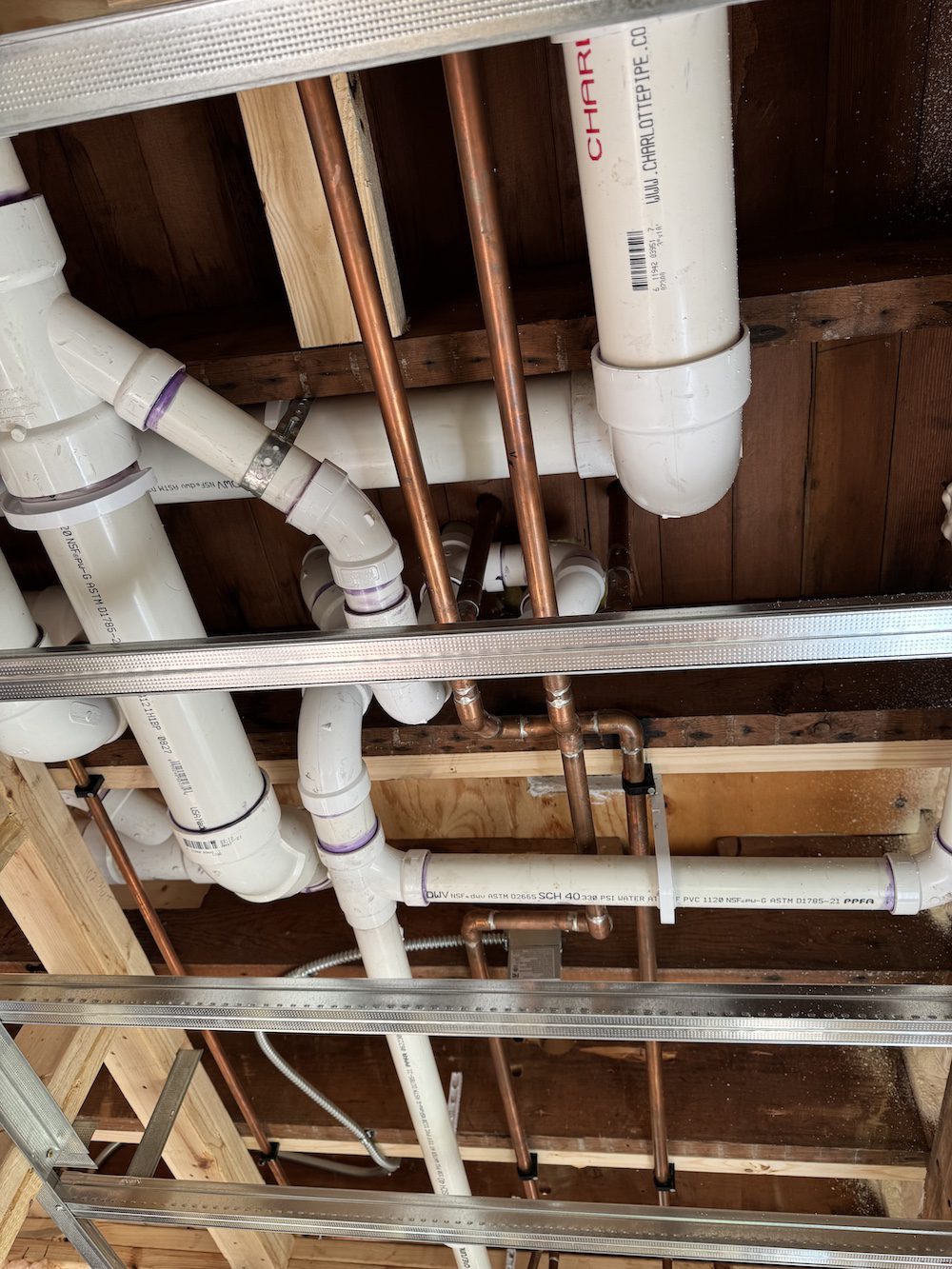
Where it gets risky is anything involving drain slope, venting, pipe material transitions, or work inside walls and floors. Illinois law under 225 ILCS 320 requires licensed plumbers for permitted work, and unpermitted plumbing work can create real problems when you sell your home. Beyond the legal side, a mistake inside a wall costs far more to fix than the original job would have cost to do right.
A good rule: if you’re not sure what you’re connecting to, or if the repair involves opening a wall, call first. A 10-minute phone conversation with a licensed plumber can save you a weekend of frustration and a much larger repair bill.
Signs Your Bathroom Plumbing Needs a Professional
- Drain that’s slow even after snaking — could be a venting issue or a deeper blockage
- Sewer smell in the bathroom — wax ring failure, dry trap, or venting problem
- Water stain on the ceiling below an upstairs bathroom — active leak inside the floor/ceiling assembly
- Low water pressure at one fixture — could be a failing valve, corroded galvanized pipe, or a supply line issue
- Toilet that rocks or has soft flooring around the base — possible subfloor damage from a long-term wax ring leak
- Any work that requires a permit under the Illinois code
Frequently Asked Questions About Bathroom Plumbing in Elgin
How much does a typical bathroom plumbing repair cost in Elgin?
It depends heavily on what’s wrong. A faucet replacement or toilet fill valve swap runs $150–$300, including labor. A drain cleaning service is typically $150–$250. More involved work — replacing a wax ring with flange repair, fixing a venting issue, or repairing a supply line inside a wall — can range from $300 to $800 or more, depending on access and materials. We give honest, upfront estimates before any work starts. Hard-water scale from Elgin’s high-mineral water supply can add time to some jobs, which is worth factoring in.
Can I legally do my own plumbing in Illinois?
Homeowners in Illinois can perform plumbing work on their own primary residence without a license for minor repairs and replacements — things like swapping a faucet, replacing a toilet, or fixing a supply line. However, any work that requires a permit (new drain lines, vent modifications, moving fixtures) must be done by or inspected by a licensed plumber under 225 ILCS 320, the Illinois Plumbing License Law. If you’re a renter or working on a rental property, different rules apply. When in doubt, a quick call to your local building department or a licensed plumber clarifies what’s required.
Why does my bathroom drain smell even after I cleaned it?
A persistent sewer smell after cleaning usually points to one of three things: a dry P-trap (the water seal has evaporated — common in guest bathrooms that don’t get used often), a failed or improperly seated wax ring at the toilet base, or a venting problem that’s allowing sewer gas to be drawn back through the drain. Running water in the fixture for 30 seconds refills a dry trap. If the smell persists after that, it’s time to have a plumber check the wax ring and vent stack. Sewer gas contains hydrogen sulfide and methane — it’s not something to ignore.
My bathroom faucet has low water pressure. Is that a DIY fix?
Sometimes. The most common cause of low pressure at a single bathroom faucet is a clogged aerator — the small screen at the tip of the spout. Unscrew it, rinse out the mineral buildup (Elgin’s hard water clogs these fast), and reinstall. That’s a two-minute fix. If cleaning the aerator doesn’t help, the issue could be a failing cartridge inside the faucet, a partially closed angle stop valve under the sink, or — in older homes — a corroded galvanized supply line that’s narrowed from the inside. The last one usually means it’s time to repipe that section. Our faucet and fixture service covers diagnosis and repair for all of these.
How do I know if my bathroom plumbing issue is an emergency?
Active water flow you can’t stop is always an emergency — shut off the angle stop valve under the fixture or the main shutoff, then call. A toilet that won’t stop running, a supply line that’s spraying, or water coming through a ceiling are all emergencies. Slow drains, minor leaks at a drain connection, and a running toilet that you can shut off at the valve are urgent but not emergencies — schedule them within a day or two before they get worse. Fox Valley Plumbing handles 24/7 emergency plumbing throughout Elgin and the Fox Valley area.
The Bottom Line on DIY Bathroom Plumbing in Elgin
Most bathroom plumbing problems in Elgin homes come down to a few recurring issues — hard water scale, aging pipe materials, and repairs that were done close but not quite right. The five mistakes above are fixable, and most of them are preventable with a little extra care and the right information before you start.
If you’ve run into one of these situations or you’re staring at a bathroom plumbing project and are not sure where to start, Fox Valley Plumbing & Backflow is a licensed Master Plumber operation that’s been serving Elgin and the Fox Valley area for over 15 years. We give straight answers, honest estimates, and we don’t upsell work you don’t need. Call us at (847) 624-3872 any time, or schedule service online. We’re here when you need us.




Leave a Reply
Want to join the discussion?Feel free to contribute!