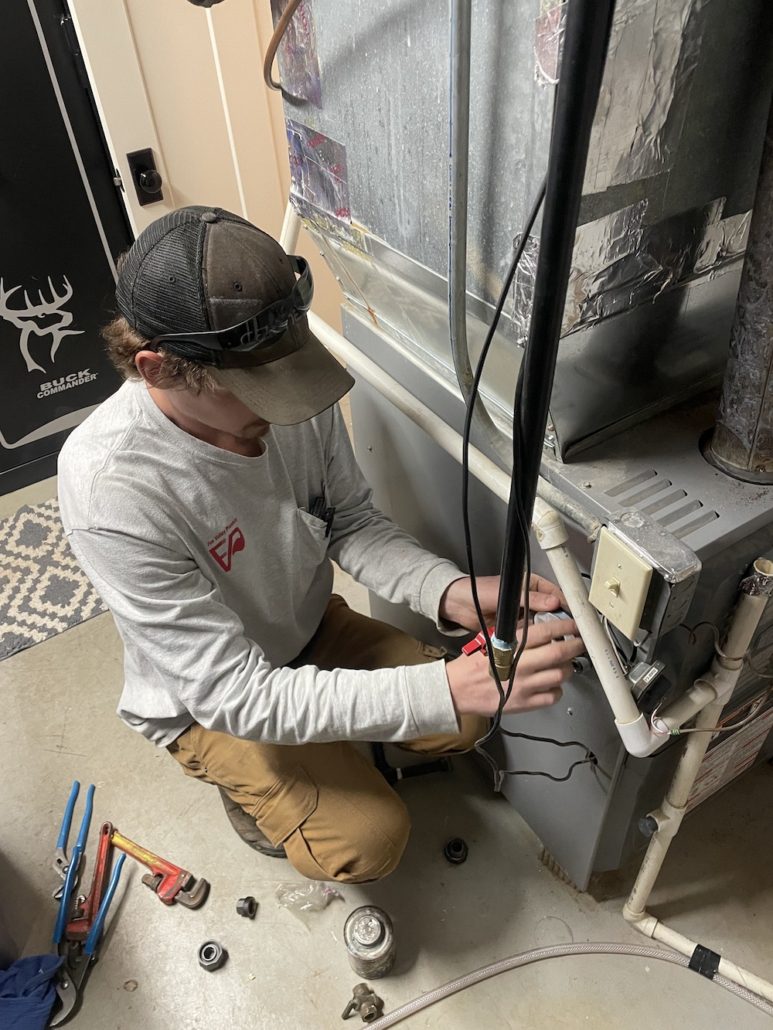
You’ve got a slow drain, a water heater that’s making a sound you’ve never heard before, or a letter from the City of Elgin about a backflow test, and you’re not sure whether you need a plumber today or whether this can wait until next week. These are the questions we hear most often from homeowners across Elgin, South Elgin, Bartlett, and the rest of the Fox Valley. We’re going to answer them straight, the way we would if you caught us at the hardware store. No upsell, no scare tactics, just honest answers about plumbing in Elgin, IL.
Water Quality and Hard Water in Elgin
Why does my water leave white crusty deposits on everything?
That white crust is calcium and magnesium — the minerals that make Elgin’s water some of the hardest in the Chicago suburbs. The city’s water supply typically runs between 15 and 25 grains per gallon (GPG), which the American Water Works Association classifies as very hard. It’s not a health hazard, but it is a plumbing hazard over time.
Scale builds up inside water heater tanks, on faucet aerators, inside supply lines, and around valve seats. A water heater working against heavy scale has to run longer to hit the same temperature, which shortens its life and raises your gas or electric bill. If you’re seeing buildup on fixtures that are less than two years old, it’s worth talking to a plumber about a whole-home water softener or at least a point-of-use filter on the kitchen line.
The fix isn’t always a softener — sometimes it’s just descaling the water heater and cleaning the aerators. But if you’re replacing fixtures every few years because of scale damage, the math usually favors treating the water at the source.
Is Elgin tap water safe to drink?
Yes — the City of Elgin publishes an annual water quality report, and the water meets all federal Safe Drinking Water Act standards. The concern isn’t usually the municipal supply itself; it’s what happens between the water main and your tap. Older homes in Elgin (pre-1986) may have copper lines soldered with lead-based solder, or in some cases, original galvanized steel pipes that have been corroding for 60-plus years. If your home was built before 1960 and you’ve never had the pipes inspected, that’s worth knowing about. The EPA’s drinking water guidance is a good starting point for understanding what’s in your water and what the thresholds mean.
Drains, Clogs, and Sewer Lines
My kitchen drain is slow. Can I just use Drano?
We get this one constantly, and the honest answer is: we’d rather you didn’t. Chemical drain cleaners work by generating heat through a chemical reaction — that heat is what breaks down the clog. But that same heat and caustic chemistry can soften PVC fittings, eat through older galvanized pipe, and damage the rubber gaskets in your P-trap. If the clog doesn’t clear on the first try and you pour a second bottle in, you’ve now got a pipe full of caustic liquid that a plumber has to deal with safely before they can even look at the blockage.
A slow kitchen drain is almost always grease and food debris — and the right tool is either a drain snake or, for a stubborn buildup, high-pressure water jetting that actually flushes the line clean rather than just punching a hole through the clog. That hole closes back up within weeks. A properly cleaned line stays clear much longer.
One more thing: hot water does not melt grease. It liquefies it temporarily, moves it 30 feet downstream, and then it re-solidifies right where your drain line makes its first turn. That’s a myth that costs homeowners real money.
My basement drain gurgles when the washing machine runs. What does that mean?
That gurgling sound is air being pulled through a partially blocked drain — and when it happens specifically when the washer dumps its load, it usually means the main sewer line is struggling to handle the volume. The washing machine drains fast and hard, and if the main line has a partial blockage (roots, grease buildup, a belly in the pipe), the air has to go somewhere. It comes back up through the path of least resistance, which is often the basement floor drain.
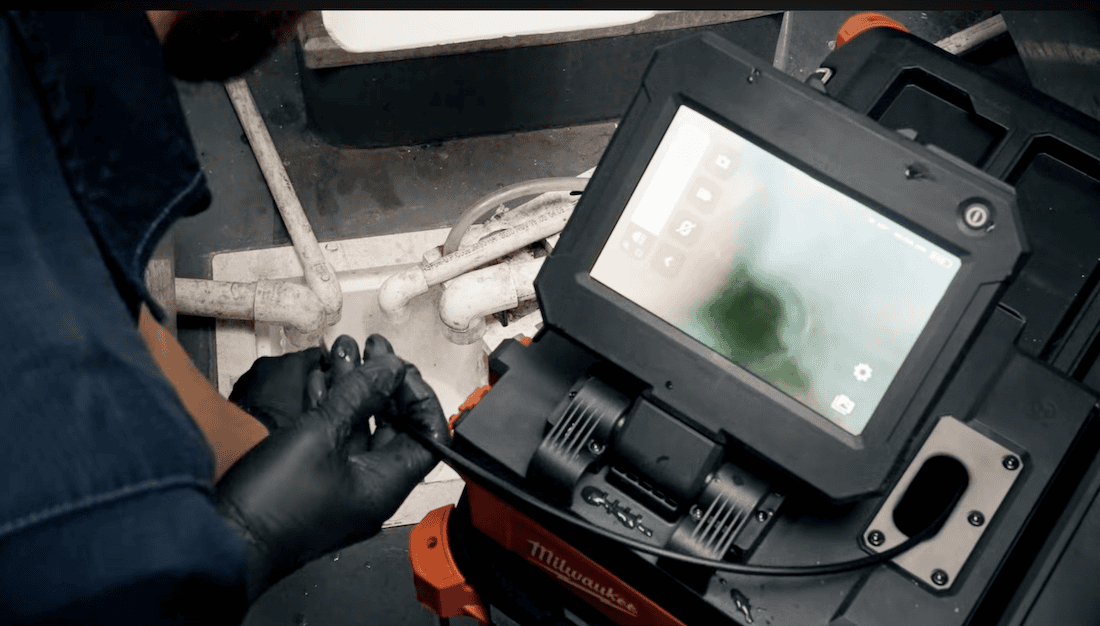
This is not a “wait and see” situation. A partial blockage becomes a full blockage, and a full blockage in the main line means sewage backing up into your basement. A video sewer inspection will tell you exactly what’s in the line and where — no guessing, no unnecessary digging. If it’s roots, we can jet the line. If it’s a collapsed section, you’ll know before it becomes an emergency.
Water Heaters in Elgin Homes
How do I know if my water heater needs to be repaired or replaced?
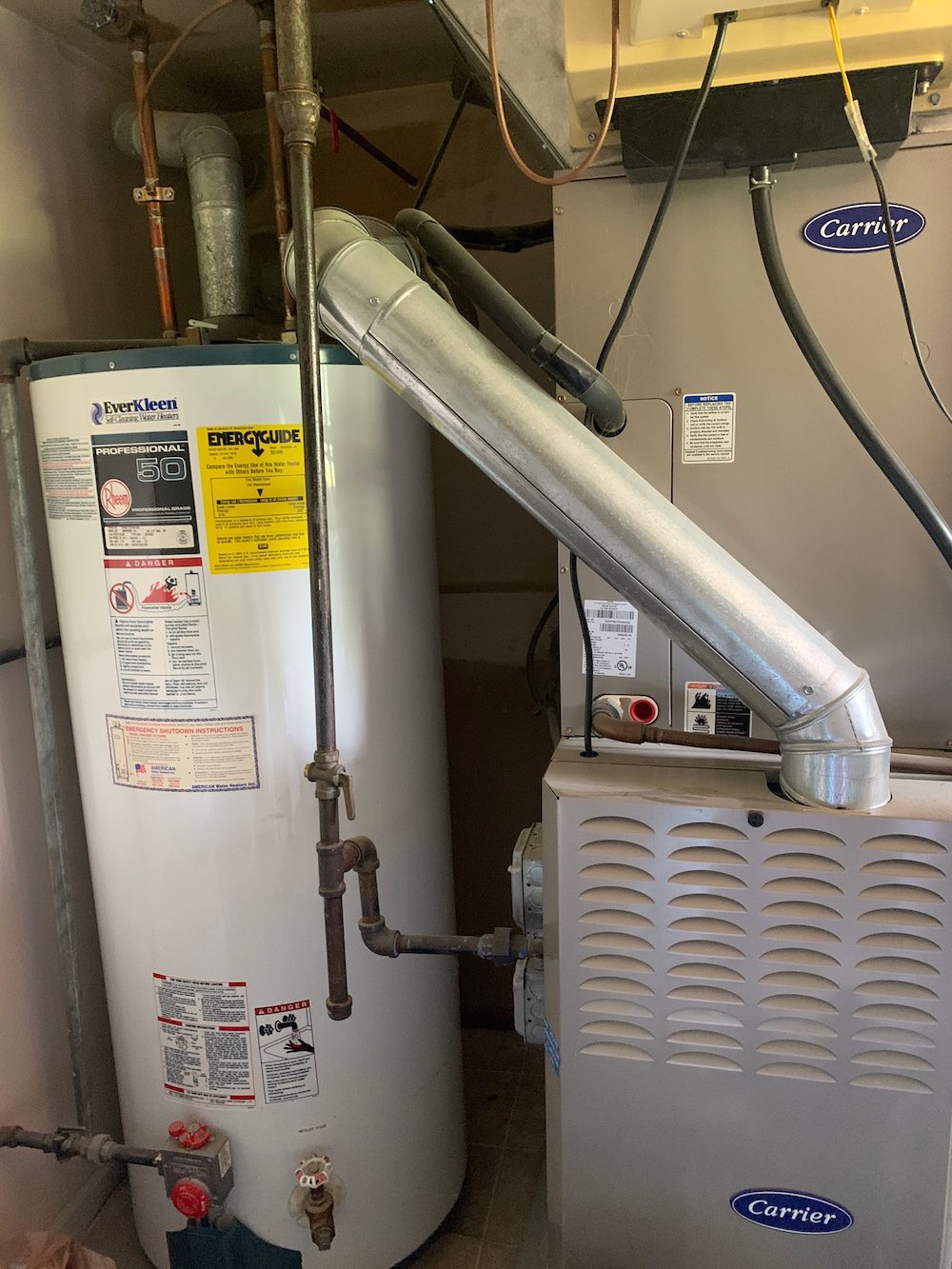
Age is the first number to look at. A standard tank water heater in Elgin — fighting hard water and running year-round — has a realistic lifespan of 8 to 12 years. The manufacturer’s label on the side of the unit will have the serial number; the first four digits usually encode the month and year of manufacture. If your unit is under 8 years old and the problem is a failed thermostat, a bad heating element, or a faulty pressure relief valve, repair almost always makes sense. If it’s over 10 years old and you’re seeing rust-colored water, a weeping seam, or a rumbling sound during heating cycles (that’s sediment), replacement is the smarter call.
The rumbling sound specifically is worth paying attention to. It means sediment has built up on the bottom of the tank, so the burner heats through a layer of mineral scale. That stresses the tank lining and accelerates corrosion. You can sometimes extend a younger unit’s life by flushing the tank annually—something most homeowners never do. Our water heater repair and installation page walks through what to expect from both options.
Is a tankless water heater worth it for an Elgin home?
It can be — but sizing matters more than the marketing suggests. A tankless unit heats water on demand, which means no standby heat loss and potentially lower energy bills. The catch is that Elgin’s hard water is hard on tankless units. The heat exchanger — the core of the unit — is a tight coil of small-diameter tubing, and scale builds up in it faster than in a tank. Without annual descaling, a tankless unit in this area can fail in 5 to 7 years, which wipes out the efficiency savings.
If you’re seriously considering the switch, talk to a plumber about pairing the unit with a water softener or, at minimum, a scale inhibitor. Also make sure the unit is sized for your peak demand — a single unit that’s undersized for a family of five will leave someone with a cold shower. Our tankless water heater installation and repair service covers sizing, installation, and the maintenance schedule you’ll need to protect the investment.
Backflow Prevention and Licensing
I got a notice about a backflow test. Do I actually have to do this?
Yes — and the deadline is real. Under Illinois EPA Title 35, Part 653 (cross-connection control rules), any property with a backflow preventer installed on a high-hazard connection is required to have that device tested annually by a licensed tester. The City of Elgin enforces this, and the notice you received is not a suggestion. If you miss the deadline, the city can flag your account and, in some cases, restrict water service.
The test itself takes about 30 minutes. A licensed tester hooks up a differential pressure gauge to the device, runs the test, and files the report with the municipality. If the device passes, you’re done for the year. If it fails — which happens with older or corroded assemblies — it needs to be repaired or replaced before the report can be filed. Our backflow testing and installation service handles the test, the paperwork, and any repairs in one visit. The Illinois Department of Public Health maintains the licensing requirements for backflow testers if you want to verify credentials before you hire anyone.
Does backflow prevention only apply to irrigation systems?
This is one of the most common misconceptions we run into. Backflow prevention applies to any cross-connection — any point where your potable water supply could come into contact with a non-potable source and flow backward into the main. Irrigation systems are the most common residential example because the sprinkler heads sit in the soil, but the same risk exists with boiler systems, fire suppression lines, commercial food equipment, and even some older hose bibs without vacuum breakers. If you have a boiler, a lawn irrigation system, or a commercial kitchen, you almost certainly have a backflow preventer somewhere — and it needs annual testing.
Licensing, Permits, and Hiring the Right Plumber
Does it matter if my plumber is licensed in Illinois?
It matters a lot — legally and practically. Illinois requires plumbers to be licensed under 225 ILCS 320, the Illinois Plumbing License Law. A licensed Master Plumber has passed a state exam, carries liability insurance, and is accountable to the Illinois Department of Public Health. An unlicensed person doing plumbing work in Illinois is breaking state law — and if something goes wrong (a leak, a failed inspection, a house fire from an improperly installed gas line), your homeowner’s insurance may deny the claim because the work wasn’t done by a licensed contractor.
Permits matter for the same reason. Major plumbing work — water heater replacement, sewer line repair, gas line work — typically requires a permit in Elgin. The permit triggers an inspection, which protects you. Work done without a permit can create problems when you sell the house. Always ask your plumber for their Illinois license number before work starts. Ours is Master Plumber IL #058-161084 / Contractor IL #055-042593 — you can verify it with the state.
What’s a realistic cost range for common plumbing repairs in Elgin?
We’re going to give you real ranges, not “it depends” non-answers — though every job has variables, so treat these as starting points:
- Drain cleaning (kitchen or bathroom): $150–$350 for a standard snake; more for jetting or if the line needs camera inspection first.
- Water heater replacement (40-gal tank, gas): $900–$1,500 installed, depending on the unit and whether code upgrades are needed (expansion tank, new venting).
- Backflow test: $75–$150 for the test alone; repair or replacement of a failed device is additional.
- Sump pump replacement: $400–$800 installed; add $300–$500 for a battery backup system.
- Main sewer line cleaning: $250–$500; video inspection adds $150–$300 but is worth it if the line has a history of problems.
- Faucet or fixture replacement: $150–$400 labor, plus the cost of the fixture.
Emergency calls — nights, weekends, holidays — carry a premium. That’s standard across the industry. The best way to avoid emergency pricing is to deal with the slow drain or the weeping water heater before it becomes a 2 a.m. crisis. Our preferred customer membership includes priority scheduling and discounts that help with exactly that.
Emergency Situations
My pipe burst. What do I do right now?
First: shut off the water. Your main shutoff is almost always where the water line enters the house — in Elgin homes, that’s typically in the basement near the front foundation wall, or in a utility closet. Turn it clockwise until it stops. If you can’t find it or it won’t turn, the curb stop (the shutoff at the street) is the backup — you’ll need a curb key or a long-handled wrench to reach it.
Once the water is off, the emergency is contained. Open a faucet on the lowest floor to drain pressure from the lines, and then call a plumber. Don’t try to patch a burst pipe with tape or a repair clamp as a permanent fix — those are temporary measures that fail. A burst pipe in an Elgin winter is almost always caused by a section of pipe that froze and expanded; the visible split may not be the only weak spot. A plumber will inspect the full run, not just the break. Our 24/7 emergency plumbing service is available when you need it.
How do I find my main water shutoff before there’s an emergency?
Do this today, not when water is spraying across your basement. In most Elgin homes built after 1970, the main shutoff is a ball valve (lever handle) on the supply line in the basement, within a few feet of where the pipe comes through the foundation. Older homes may have a gate valve (round wheel handle) — these are slower to close and sometimes seize up from years of non-use. If yours is a gate valve that hasn’t been turned in years, have a plumber replace it with a ball valve. It’s a small job that can save you thousands in water damage. Tag the shutoff with a piece of tape or a label so anyone in the house can find it fast.
Frequently Asked Questions
How often should I have my drains professionally cleaned?
For most Elgin households, a professional drain cleaning every 18 to 24 months is a reasonable baseline — more often if you have older cast iron drain lines, a large household, or a history of clogs. Kitchen drains in homes where cooking happens daily tend to build up grease faster than the manufacturer’s “normal use” assumptions account for. Main sewer lines in neighborhoods with mature trees (a lot of Elgin’s older subdivisions qualify) benefit from annual inspection or cleaning because root intrusion is slow and silent until it isn’t. The This Old House plumbing guides offer good general maintenance timelines if you want a second reference point.
Can I add a bathroom to my Elgin home without a permit?
No — and you shouldn’t try. Adding a bathroom involves new drain lines, new vent lines, new supply lines, and potentially changes to the main stack. All of that requires a permit in Elgin, and the permit requires a licensed plumber to do the rough-in work. The inspection that follows the permit protects you: it confirms the venting is correct (improper venting causes sewer gas to enter the living space), the drain slopes are right, and the work meets the Illinois Plumbing Code under 77 Ill. Adm. Code 890. Unpermitted bathroom additions are a red flag in real estate transactions and can complicate your homeowner’s insurance. Do it right the first time. Our residential plumbing service handles additions and remodels with all required permits pulled.
What’s the difference between a plumber and a Master Plumber?
In Illinois, a licensed plumber has passed the journeyman exam and can perform plumbing work under supervision. A Master Plumber has additional experience, has passed a more comprehensive state exam, and is licensed to run a plumbing contracting business and pull permits independently. When you hire a plumbing company, the work should be performed or directly supervised by a licensed plumber, and the company should hold a contractor’s license issued by the Illinois Department of Public Health. Ask for both license numbers — a legitimate operation will give them to you without hesitation. The International Association of Plumbing and Mechanical Officials (IAPMO) sets many of the standards that the Illinois plumbing code is built on, if you want to understand the framework behind the licensing.
My toilet runs constantly. Is that really a big deal?
It’s a bigger deal than it sounds. A running toilet typically wastes between 200 and 700 gallons of water per day — that’s real money on your Elgin water bill every month, and it adds up fast. The most common cause is a worn flapper that no longer seals the flush valve, which is a $10 part and a 15-minute fix if you’re comfortable with basic DIY. The second most common cause is a float that’s set too high, letting water run continuously into the overflow tube. If you’ve replaced the flapper and the toilet still runs, the flush valve seat may be corroded — at that point, replacing the entire flush valve assembly (or the toilet, if it’s old) is usually more cost-effective than chasing the problem. Don’t ignore it; the water you’re wasting is water you’re paying for.
Still Have Questions? Let’s Talk.
We’ve been doing plumbing in Elgin, IL for over 15 years, and the questions above are the ones that come up again and again — because they’re the right questions to ask before you spend money or ignore a problem that’s getting worse. If your situation didn’t fit neatly into any of these answers, that’s what we’re here for.
Call us at (847) 624-3872 — we answer real calls, not just voicemails — or send us a message through our contact page, and we’ll get back to you the same day. If it’s urgent, say so. We’re licensed, insured, and available 24/7 for emergencies across Elgin, South Elgin, Bartlett, Streamwood, and the surrounding Fox Valley communities.